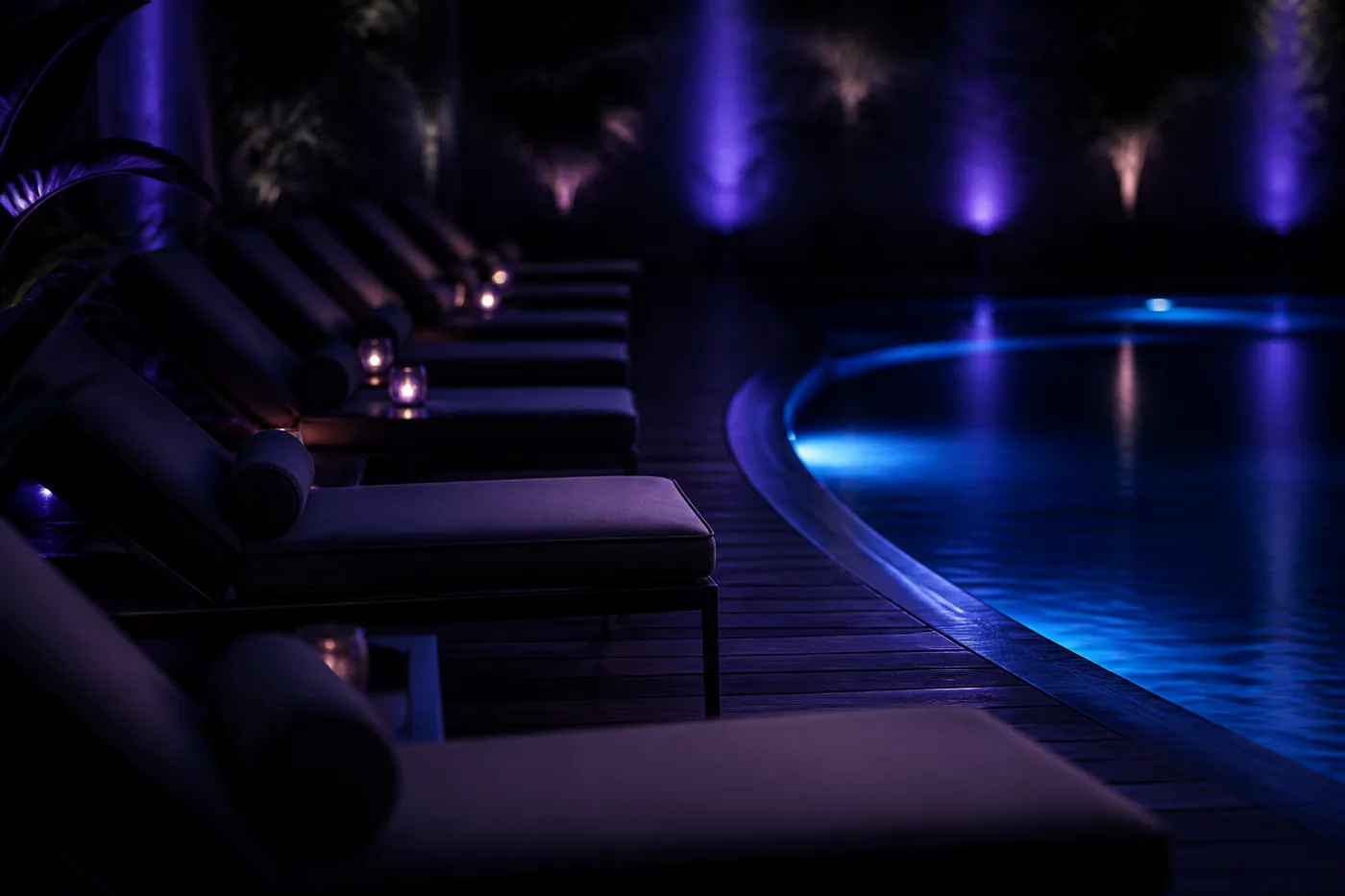
Commercial pool furniture lives in the meanest environment in hospitality: constant UV, chlorine or salt spray, sunscreen (which chemically attacks many finishes), wet swimsuits, and guests who drag chaises across concrete all day. Only a few material systems reliably survive it. That short list is powder-coated aluminum frames with vinyl sling or strap, HDPE/marine-grade polymer lumber, and commercial resin, and everything else is a replacement cycle wearing a discount price.
We've supplied pool and patio packages for hotel properties in very different climates, and pool decks taught us more about material honesty than any dining room ever did. A dining room forgives an optimistic spec for years, but a pool deck grades your homework in one season. Here's what holds up, everywhere from Phoenix sun to coastal salt.
What materials survive a commercial pool deck?
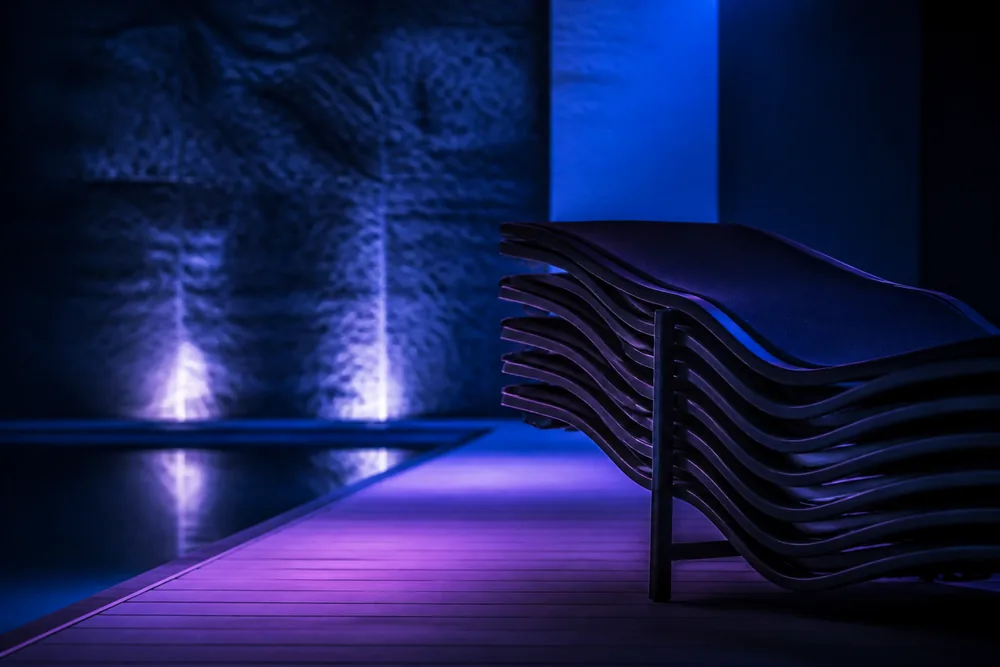
Powder-coated aluminum frames: the workhorse. Aluminum doesn't rust, weighs little enough for guests to reposition (and for staff to stack 60 chaises nightly), and with a quality commercial powder coat it shrugs off chlorine air. Spec notes that matter: welded frames outlast bolted ones on decks, and coastal properties should ask for a marine-grade coating spec, because salt air finds every scratch.
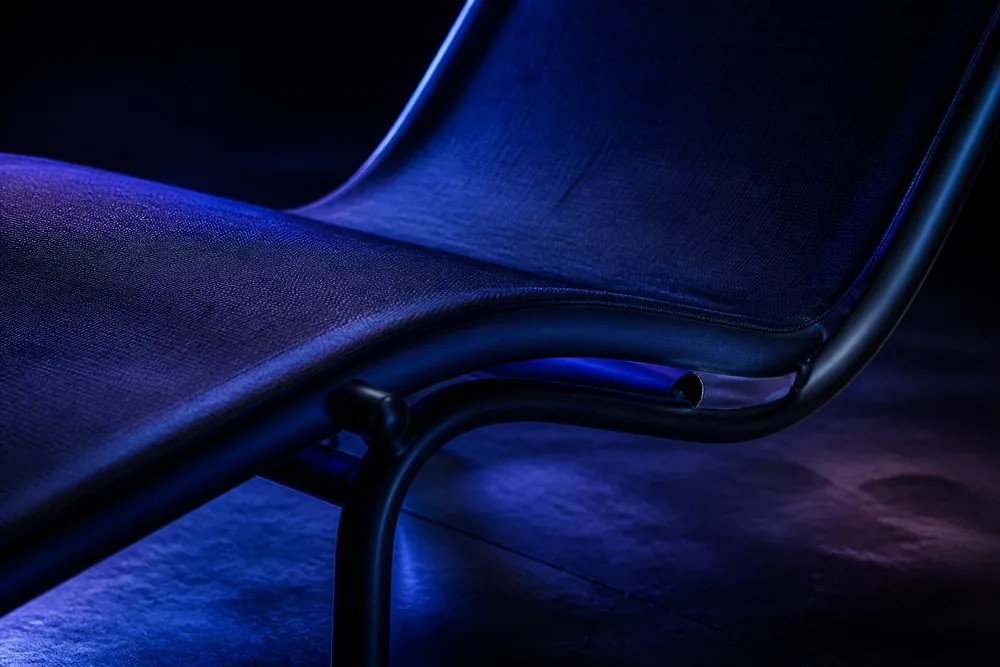
Sling (vinyl-coated polyester mesh). The standard seating surface for commercial decks: drains instantly, dries fast, tolerates sunscreen, and (the underrated part) slings are replaceable. A good aluminum sling chaise gets re-slung at a fraction of replacement cost, which is the actual secret of pool-furniture economics. Budget on sling fabric lifespan of roughly 3–5 years in hard sun before it fades or bags.
Strap (vinyl strap over aluminum). The classic resort chaise. Durable, cheap to re-strap, very "hotel pool" visually, which is either the vibe or the problem, your call.
HDPE / marine-grade polymer (MGP). Solid polymer lumber, the material of the modern premium pool deck. Impervious to water, chlorine, salt, and sunscreen; color runs through the material so scratches don't show; effectively zero maintenance. Trade-offs: heavy (a feature in wind, a chore for staff) and the highest upfront price of the group. In brutal-sun and coastal markets it has the best ten-year math on this list.
Commercial resin/polypropylene. Injection-molded loungers and chairs, stackable and budget-friendly. Legitimate at the value tier if it's genuinely commercial product with UV-stabilized resin. See the grade-verification habits in what commercial grade actually means. Consumer resin chalks, fades, and cracks in a season or two of real sun.
What fails on pool decks?
- Steel frames. Rust wins, always; chlorine air just accelerates the schedule. Powder coat delays it; scratches from deck-dragging end the delay.
- Standard wicker and most woods. Natural wicker and untreated woods don't belong within splash distance. (Teak is the honorable exception if you accept silver weathering and real maintenance; synthetic resin wicker over aluminum is fine but check the resin's UV rating.)
- Cushioned everything, unless you have a storage program. Cushions on a pool deck need marine-grade foam, solution-dyed fabric, and somewhere to live at night. Properties without cushion storage discipline should buy sling and never look back.
- Anything residential. Residential outdoor warranties exclude commercial use entirely, and a pool deck is commercial use at maximum intensity. The full economics of that mistake are in contract vs consumer outdoor furniture.
What does commercial pool furniture cost?
Honest per-piece ranges for genuinely commercial product:
- Commercial resin loungers: $150–$300
- Aluminum sling chaises: $250–$600, the volume sweet spot for most hotel decks
- Strap chaises: $200–$450
- HDPE/MGP chaises: $500–$1,200+
- Side tables: $60–$200; umbrellas with commercial bases: $300–$900 (buy commercial umbrella bases; wind converts cheap umbrellas into javelins, and that sentence comes from an incident report we once had to read)
Freight adds real money. Chaises are bulky, light-for-their-size freight, the expensive kind to ship. Always compare landed cost, and know that quantity pricing typically steps at two or three dozen pieces; the mechanics are in the bulk ordering guide.
How many chaises does my deck need?
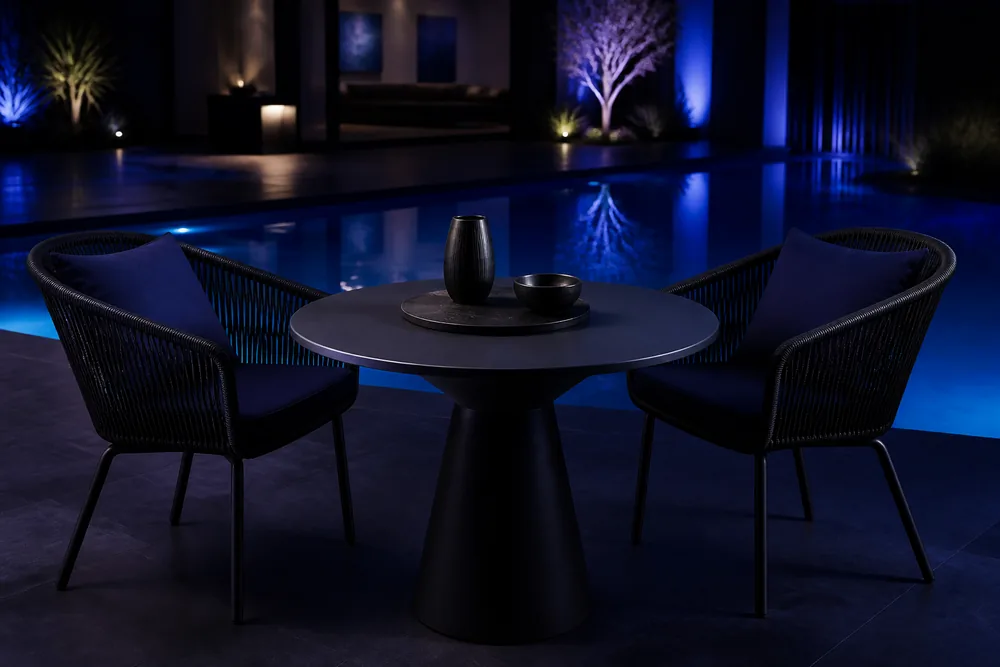
The working ratios we use: resort and leisure-heavy properties want chaise capacity for roughly 25–40% of peak expected pool users, select-service hotels less. Physically, plan a chaise footprint of about 2 by 7 feet plus circulation. Realistically that's 30–35 square feet of deck per chaise once you include walkways, and local code sets required clear paths around the water. Then add the mix pieces: side tables (one per two chaises), some upright seating and dining sets for eaters and non-loungers, and shade. Sun mapping beats spreadsheet math, though. An afternoon watching where guests actually drag chaises will re-plan your deck for free. They chase the sun in March and flee it in August; furniture should be movable enough to follow.
Does climate change what I should buy?
Yes, and this is where one-size recommendations fall apart:
- Desert sun (Phoenix and friends): UV is the enemy. Solution-dyed slings, UV-stabilized HDPE, and light colors that don't brand guests' legs at 4 p.m. Expect the short end of every fabric lifespan range.
- Coastal and salt-pool properties: corrosion is the enemy. Marine-grade coating specs, stainless hardware, HDPE's total indifference to salt. Rinse-down maintenance programs genuinely extend frame life.
- Four-season markets: storage is the enemy. Buy stackable product and confirm the stack height fits your storage room before ordering. We've measured a storage room after the furniture arrived exactly once, which was one time too many. Winter storage doubles furniture life in freeze climates.
- Humid subtropics: mildew is the enemy. Mesh slings that dry in minutes beat anything cushioned, and dark colors hide the inevitable.
How long should commercial pool furniture last, and what's the maintenance program?
Honest service-life expectations in real commercial duty, assuming you bought genuinely commercial product:
- Aluminum sling frames: 8–12 years, with slings replaced every 3–5 (plan re-slinging as scheduled maintenance, like painting, not as a surprise)
- Strap chaises: frames similar; re-strapping on the same 3–5 year rhythm
- HDPE/MGP: 10–15+ years with near-zero intervention; fading is the eventual retirement reason, not failure
- Commercial resin: 3–6 years in moderate climates and the short end in desert sun, priced accordingly
The maintenance program that actually extends those numbers costs almost nothing: monthly bolt-and-weld checks (loose fasteners chew oval holes that can't be fixed), fresh-water rinses on coastal decks, immediate touch-up of powder-coat scratches before corrosion moves in, glide replacement so frames don't grind concrete, and winter storage in freeze climates. Assign it to someone by name; "the team" maintains nothing. The properties whose decks still look sharp in year eight all have one person with a monthly checklist, and the ones replacing everything in year three all had a vibe instead.
Budget-wise, treat the deck like hotels treat rooms, with a rolling replacement reserve rather than a decennial crisis. Replacing 20% of chaises annually keeps the deck uniformly presentable, spreads cost, and dodges the discontinued-product mismatch problem, because you're refreshing within a live product program. Which is the sneaky reason to buy from established commercial lines in the first place: the manufacturer still selling that chaise in year six is the one who can also still sell you slings for it.
The short version
Buy powder-coated aluminum with sling for the volume of the deck, HDPE where budget allows or conditions are brutal, commercial resin only at the honest value tier, and nothing residential ever. Plan slings as a replaceable wear part, cushions only with a storage program, and let your climate pick the material fight it can actually win.
Furnishing a deck this season? Send us your deck dimensions and climate and we'll spec a package that's still presentable in year five, with the freight priced in, because chaises ship like feathers in refrigerator boxes and the freight quote surprises everyone exactly once.