
Here's the honest routing answer first, because people searching "FF&E movers" usually need one of three different companies: if you're relocating existing furniture (an office move, a hotel closing rooms for renovation), you want an FF&E mover or commercial relocation company. If you're receiving and installing new furniture, you want a receiving warehouse plus an installation crew — different service, different pricing. And if you're buying a whole project's worth of furniture, logistics should be planned into the procurement itself, which is the world we come from.
We ran the delivery end of FF&E projects for fifteen years, and we'll tell you what we tell every client: the furniture is usually fine. It's the last hundred miles that eat projects.
What's the difference between an FF&E mover and an FF&E installer?
- FF&E movers / commercial relocation companies move existing assets — decommission, wrap, transport, reinstall. Priced by crew hours, truck count, and building conditions (elevators, dock access, union requirements). If that's your project, get two or three local commercial movers to walk the site; don't book off a phone estimate for anything over a truckload.
- FF&E installers receive new product and do final placement and assembly — they work from plans, set furniture by room, level it, and generate the punch list. Many receiving warehouses run their own install crews.
- Freight carriers just get pallets from factory to dock. They will not bring your credenza to the fourth floor. Ever. This surprise has ruined more delivery days than weather.
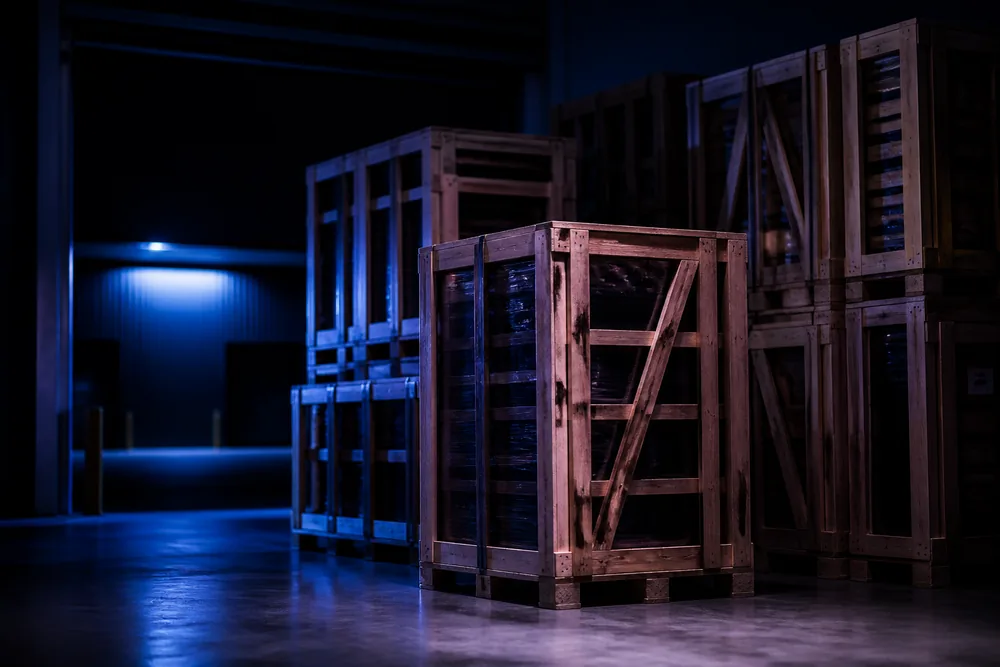
How does new-furniture FF&E logistics actually flow?
The chain on a properly run project:
- Factory ships — by container (imports) or LTL/FTL trucking (domestic). LTL means "less than truckload," your freight sharing a trailer; FTL is a dedicated truck, which starts making sense around 12–16 pallets.
- Receiving warehouse takes delivery. Everything is offloaded, counted against packing lists, opened or spot-checked, and — critically — damage is photographed and noted on the delivery receipt the day it lands.
- Storage and staging. Product waits until the site is actually ready — finished floors, working elevator, lockable space. Warehouses charge per pallet per month or per piece; budget for 30–60 days because construction schedules slip.
- Delivery and installation. Crews load out by floor or by room, place per plan, assemble, level, and haul away a small mountain of packaging. (Debris removal is a real line item — a 100-room hotel's worth of cartons is a dumpster program, not a broom.)
- Punch list. Room-by-room walk: every scratch, shortage, wrong finish, and wobble goes on one documented list with photos, then gets resolved through freight claims, warranty claims, or replacements.
Why can't furniture just deliver straight to the site?
Sometimes it can — a single restaurant taking one truck of chairs into a finished space doesn't need a warehouse. But direct-to-site fails when any of these are true: the space is still under construction, deliveries arrive over weeks from multiple vendors, there's nowhere lockable to store product, or nobody is on site who can properly receive freight (count it, inspect it, annotate the delivery receipt).
That last one matters more than people realize. Signing a delivery receipt clean means legally the freight arrived undamaged. Discover the cracked table tops a week later and your claim is now "concealed damage," with a short window (report it within days, not weeks) and a much lower success rate. A receiving warehouse's whole job is to never sign clean for damaged freight.

What is white-glove delivery and is it worth it?
White-glove means inside delivery, placement, assembly, and packaging removal — as opposed to dock or curbside delivery, where the driver's responsibility ends at the tailgate. For commercial projects, the honest answer is you almost always want white-glove or a local install crew doing the equivalent, because your staff opening 200 cartons of chairs with box cutters is slower, riskier, and usually more expensive than it looks once you price their time and one damaged floor.
What does FF&E installation cost?
Working ranges from projects we've run, as a share of the FF&E product value:
- Simple product, easy building (stack chairs and tables into a ground-floor hall): 3–6% of product cost
- Typical mixed project (restaurant or office fit-out, some assembly, normal access): 6–12%
- Complex (hotel guest rooms, occupied buildings, night work, no dock, union jurisdictions): 12–20%+
Freight to get product there is separate — commonly another 8–15% of product value for domestic moves, more for small orders because minimums bite. When you compare supplier quotes, this is why we harp on landed cost: a quote's freight and delivery terms can swing the real total more than the unit prices do.

What about freight class — why does my quote mention it?
U.S. LTL freight prices off the NMFC classification system, where every commodity gets a class from 50 to 500 based mostly on density. Assembled furniture is light for the space it takes, so it books at painfully high classes — often 125 to 250 — while the same chairs knocked-down (KD) in cartons book lower and ship dramatically cheaper. It's one of the quiet reasons commercial suppliers ship KD product and why "some assembly" saves real money at volume. If a supplier quotes freight that looks too good, ask what class they rated it and who eats the reclassification bill if the carrier disagrees. (The carrier reweighs. They always reweigh.)
Who manages all this on a real project?
On big projects, an FF&E procurement service runs the chain end-to-end — booking freight, contracting the warehouse, scheduling installers against construction reality, and fighting the claims. That coordination is most of what a procurement fee buys, honestly; the full process is in our FF&E procurement guide, and what the service looks like when we run it is on the FF&E procurement page.
On small projects, you can run it yourself with three disciplines: one person owns receiving (with a camera and instructions never to sign clean for damage), nothing delivers before the space can accept it, and every PO's freight terms are written down before you order. Timing the orders so everything lands in the right sequence is its own art — our lead times guide covers the calendar side.
How far ahead should freight, warehousing, and installers be booked?
Working backward from install day, the booking calendar we run:
- Installation crews: 4–8 weeks out, longer in busy construction markets and at year-end (everyone opens in Q4; install crews know it and price it). Confirm crew size against your actual piece count — a two-person crew "finishing" a 100-room tower is a schedule fiction.
- Receiving warehouse: 6–8 weeks out, with a realistic pallet estimate so they hold the floor space. Ask their damage-documentation process before signing — if the answer isn't "photos, exception noted on the delivery receipt, same-day email," keep shopping.
- Freight: booked when each PO ships, but planned at PO time. FTL lanes book days ahead; container drayage needs appointments; and anything delivering into a city center may need certificates of insurance, dock reservations, and elevator protection scheduled with building management two weeks ahead. The COI nobody requested is the number-one cause of trucks circling the block at $150 an hour.
And one date to treat as sacred: the walk-through where you confirm the site can physically receive furniture — doors wide enough, elevator working, floors done, power on, space lockable. Ten minutes with a tape measure beats the legendary stories every installer tells about sofas that didn't fit in freight elevators. We have one of those stories. The sofa won.
The short version
Movers relocate old furniture. Installers place new furniture. Warehouses receive and hold it. Carriers only touch the dock. Somebody has to conduct the orchestra — and if nobody on your project owns that job yet, that's the gap to fix before a single PO goes out.
If you'd rather hand us the whole thing — sourcing and the delivery chain — send us your project. Logistics is the least glamorous thing we do and the reason our openings opened.