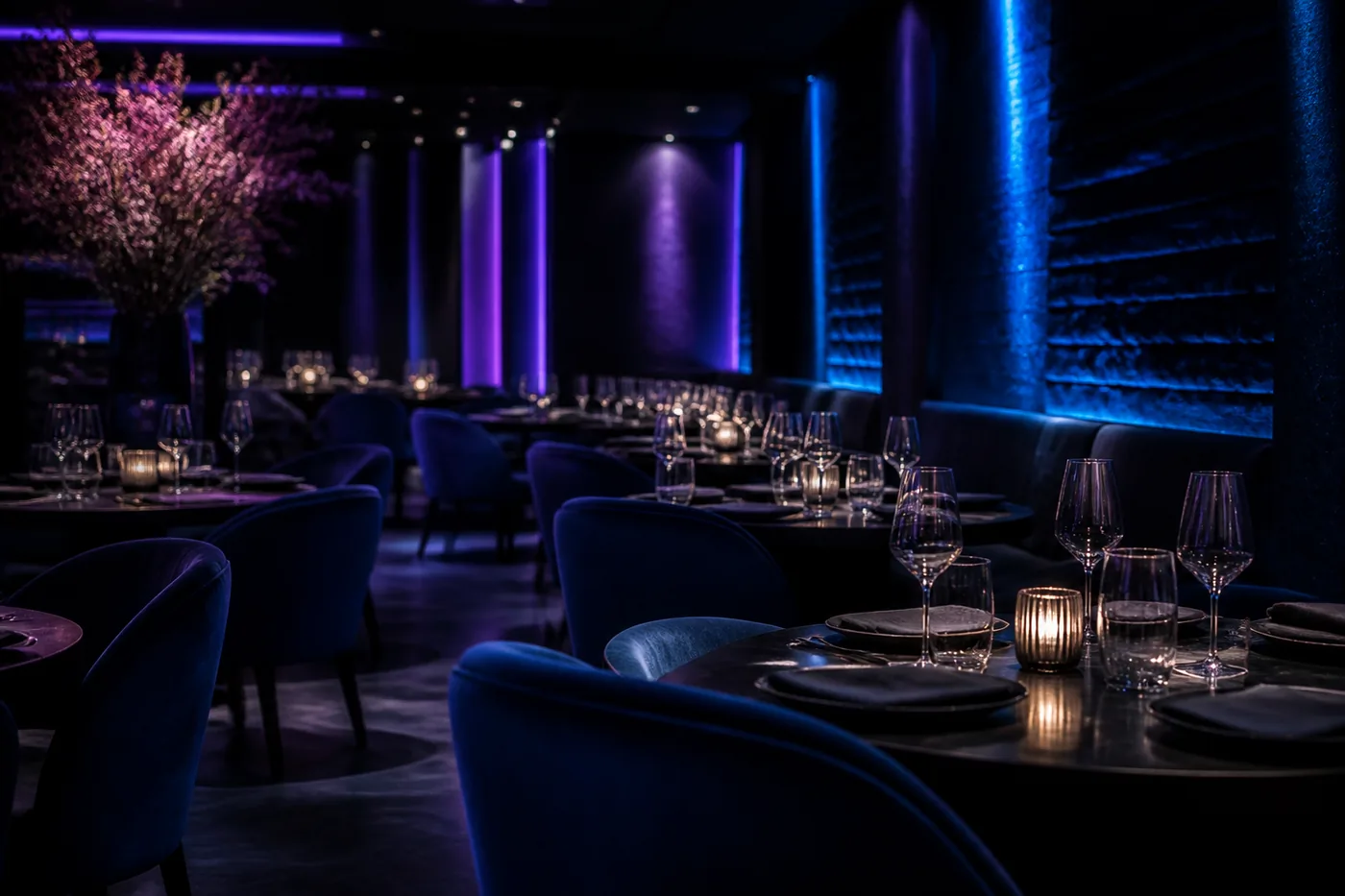
Somebody on your project has already said the sentence "we have 96 seats, so we need 96 chairs." It sounds airtight. It's also how restaurants end up renting folding chairs during their first busy month, or paying to store a stack of extras that never leave the box.
We've sized chair orders for a lot of dining rooms. Here's the actual math.
Start from the floor plan, not the dream
Your architect's seat count is a maximum, not a plan. Before we quote anything, we check three things against it:
- Service circulation. Servers need to move between tables with plates. If the plan shows tables closer than about 18 inches of clear path, some of those seats are theoretical.
- The tables you're actually buying. A 30-inch square top seats two comfortably and four when people like each other. Seat counts drawn with generic furniture shift when real dimensions arrive.
- Banquettes and booths. Fixed seating changes your chair count directly: a wall of banquette seating might mean you need half the chairs the seat count implies.
Do this before pricing anything. It's a one-hour exercise that regularly moves an order by ten or fifteen chairs in either direction.
The spares rule we never skip
Order 5 to 10 percent over your working seat count. Not because chairs are fragile (commercial-grade chairs shouldn't be) but because dining rooms are hard on furniture in ways that have nothing to do with quality:
- A chair gets dragged outside for a smoke break and rained on
- A customer incident takes one out of service the same night
- A leg meets a mop bucket at full speed
- Your patio expansion in year two wants matching seating
Here's the part that matters: fabric and finish programs get discontinued. If you order 96 chairs and need four more in year three, there's a real chance the exact chair no longer exists. The spares you buy on day one are the only ones guaranteed to match.

When to order fewer chairs than seats
It happens more than you'd think:
- Fixed seating does part of the job. Booths and banquettes don't need chairs.
- Your concept has a bar-heavy layout. Barstools are a separate line item with separate math (and usually a separate durability spec; footrests take a beating).
- You're phasing the buildout. If the private dining room opens in month six, order its chairs in the same program now (see the discontinuation problem above), but confirm the storage plan first.
The two expensive mistakes
Mistake one: buying residential chairs because the unit price is half. A consumer chair in commercial service fails at the joints, usually within the first year, and you'll buy the commercial chair anyway. The second time is at full freight, in a rush, with the dining room already open. We've watched this movie. It doesn't have a surprise ending.
Mistake two: comparing chair prices without freight. Chairs ship bulky. A $72 chair with $18 of freight beats an $80 chair with $4 of freight only if you never checked. Always compare landed cost: the number at your door, not the number in the catalog.
Our quick sizing formula
For a full-service dining room:
- Confirmed floor-plan seats (after the circulation check)
- Minus fixed seating (booths, banquettes)
- Plus 5–10% spares
- Rounded up to the supplier's carton quantity if it's close
That's the order. If you want us to run it against your actual floor plan, and price it landed, send it over. That's literally the job.