If you have never bought commercial furniture before, this is the page to read first. It covers what makes it different, what it actually costs, and what to check before you buy, so that none of it gets learned the expensive way.
The video above is the same crash course in about two and a half minutes. The written version, with the numbers, is below.
What commercial furniture actually is
Commercial furniture is furniture built and certified for business use. The operative word is certified: it has been tested for durability under repeated, multi-person, all-day use, rather than simply described that way in a product listing.
In the United States that means meeting BIFMA standards, set by the Business and Institutional Furniture Manufacturers Association. Those standards cover the three things most likely to fail in a public room:
- Weight capacity, tested to a stated figure rather than implied by the phrase "heavy duty"
- Structural stress, cycle-tested against being sat in, leaned back on, and dragged
- Flammability, which is what makes a piece legal to put in a public-facing space
Retail furniture has none of those requirements. It is built to assume light, occasional, single-person use, and it performs exactly as designed. Put it in a room with public traffic and it is not being abused, it is being asked to do a job it was never specified for.
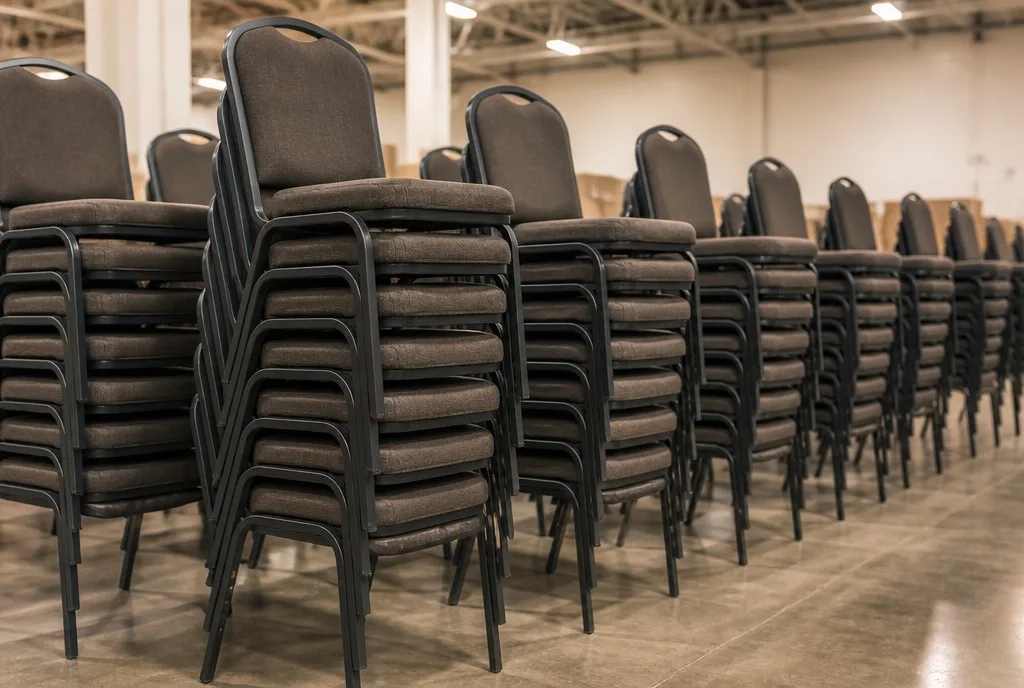
That difference in what a piece was tested against is the entire reason the two categories are priced differently.
How commercial furniture pricing works
The second surprise for first-time buyers is that there is no single price. A commercial furniture quote is usually assembled from separate parts:
- A per-unit price for the order quantity. Unit price moves with volume, so the number for 12 chairs and the number for 120 chairs are genuinely different numbers, not a discount applied at the end.
- Delivery and installation, quoted separately. Freight on furniture is priced by pallet space and weight, and installation is labor. Neither is a flat shipping fee, and neither is included in the unit price.
- Sometimes a design or spec fee, if you are working with a dealer on a full project rather than ordering from a list you already have.

This is why commercial furniture runs on a quote process rather than an add-to-cart button. That is normal for the category, not a red flag. What would be a red flag is a vendor who will not break those parts out for you, because a single blended number is the easiest place to hide freight.
The three things to check on every purchase
Whatever you are buying and whoever you are buying it from, three checks settle most of the risk.
1. BIFMA or equivalent certification. This is your proof that a piece is actually built for commercial use. Stated, not implied. If a listing leans on words like "heavy duty" or "commercial grade" without naming a standard, it has told you nothing, because neither of those phrases is regulated.
2. Warranty length and terms. Commercial furniture warranties typically run five to twelve years. A one-year warranty on a commercial-looking product is a residential warranty, and it is the manufacturer telling you what duty cycle they actually expect the piece to survive.
3. Compliance with your local codes. Fire rating and ADA accessibility, especially for public-facing spaces like waiting rooms and restaurants. These are not furniture preferences, they are conditions the room has to satisfy at inspection, and non-compliant furniture turns a purchasing decision into a liability one.
If a seller cannot answer those three clearly, that is a concern in itself. The answers are not obscure; anyone genuinely selling commercial furniture has them to hand.
The four questions to ask before you sign
Once a vendor passes those checks, four questions tell you what kind of company you are actually dealing with.
- "What is your typical lead time for this order size?" Lead time scales with quantity and with whether an item is stocked or made to order. A vendor who answers with one number regardless of size has not thought about your order.
- "What is covered under the warranty: frame, cushions, labor?" These are frequently warranted for different lengths of time. A ten-year frame warranty alongside a one-year cushion warranty is a one-year chair in the seats people actually sit in.
- "Do you have commercial and bulk order experience?" Volume orders fail in ways single orders do not: partial shipments, dye lots that do not match between production runs, freight that arrives without a liftgate.
- "What happens if something arrives damaged?" Ask before it happens rather than after. The answer reveals whether there is a real process behind the sale.

Getting clear answers to those four tells you more about a vendor than their website ever will.
The short version
Commercial furniture is a tested category, not a description. Its pricing comes in parts, and a quote process is the normal way to buy it. Certification, warranty and code compliance are the three non-negotiables, and four straight questions will tell you whether the company on the other end has done this before.
If you are about to furnish a business and want help applying any of this to your specific space, send us your list through the quote form. We will tell you where it matters and where it does not.