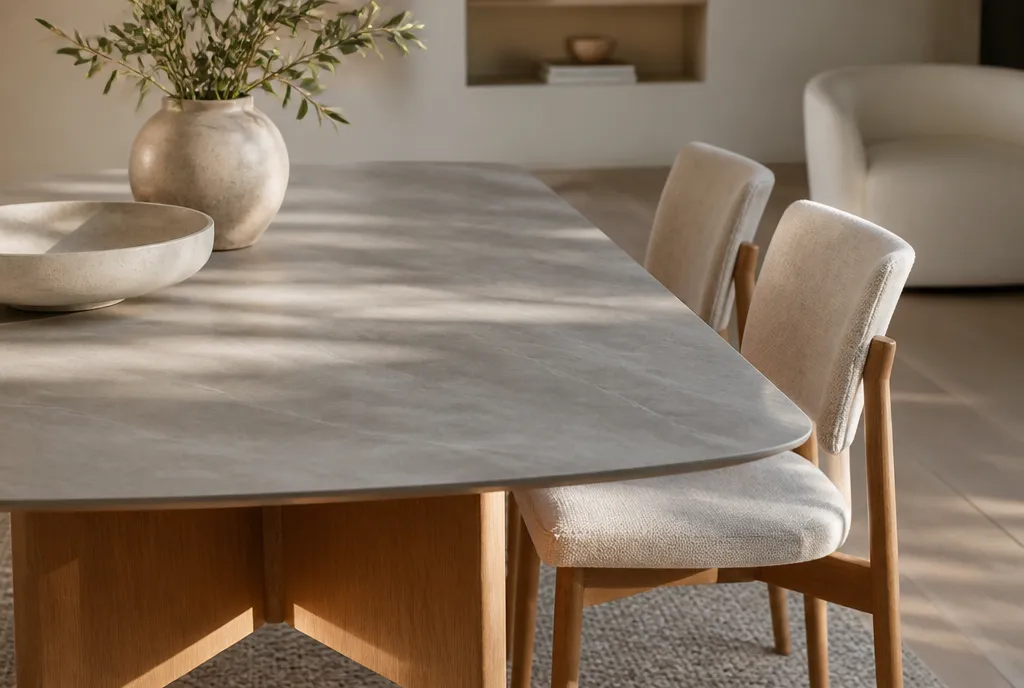
Sintered stone is mineral powder compacted under enormous pressure and fired past 1,100°C: no resins, no binders, just a dense ceramic-like slab. That manufacturing story matters because it's why the material behaves the way it does in service. Cutlery doesn't mark it, a plate straight off the pass doesn't scorch it, red wine and citrus don't etch it, and sunlight can't fade a color that runs through a fired mineral surface.
For a restaurant, that resume solves the tabletop's three usual deaths at once: the knife scratches that make wood look tired, the heat rings that ruin laminate, and the UV fade that kills almost everything on a patio. It's why we've made sintered our flagship surface. Of the tabletop programs we run, 45 are sintered: dining tops in the common commercial sizes, sintered stone dining tables as complete top-and-base packages, low tables for lounge areas, and 30 outdoor-rated tops that hold their color through full seasons of direct sun.
The material costs more than laminate and less than most people guess. Where it wins is the replacement math: a surface that still photographs clean in year six amortizes better than a cheaper top you've swapped twice. Send us your table count and sizes, and we'll quote sintered against a conventional surface so you can see both numbers side by side.