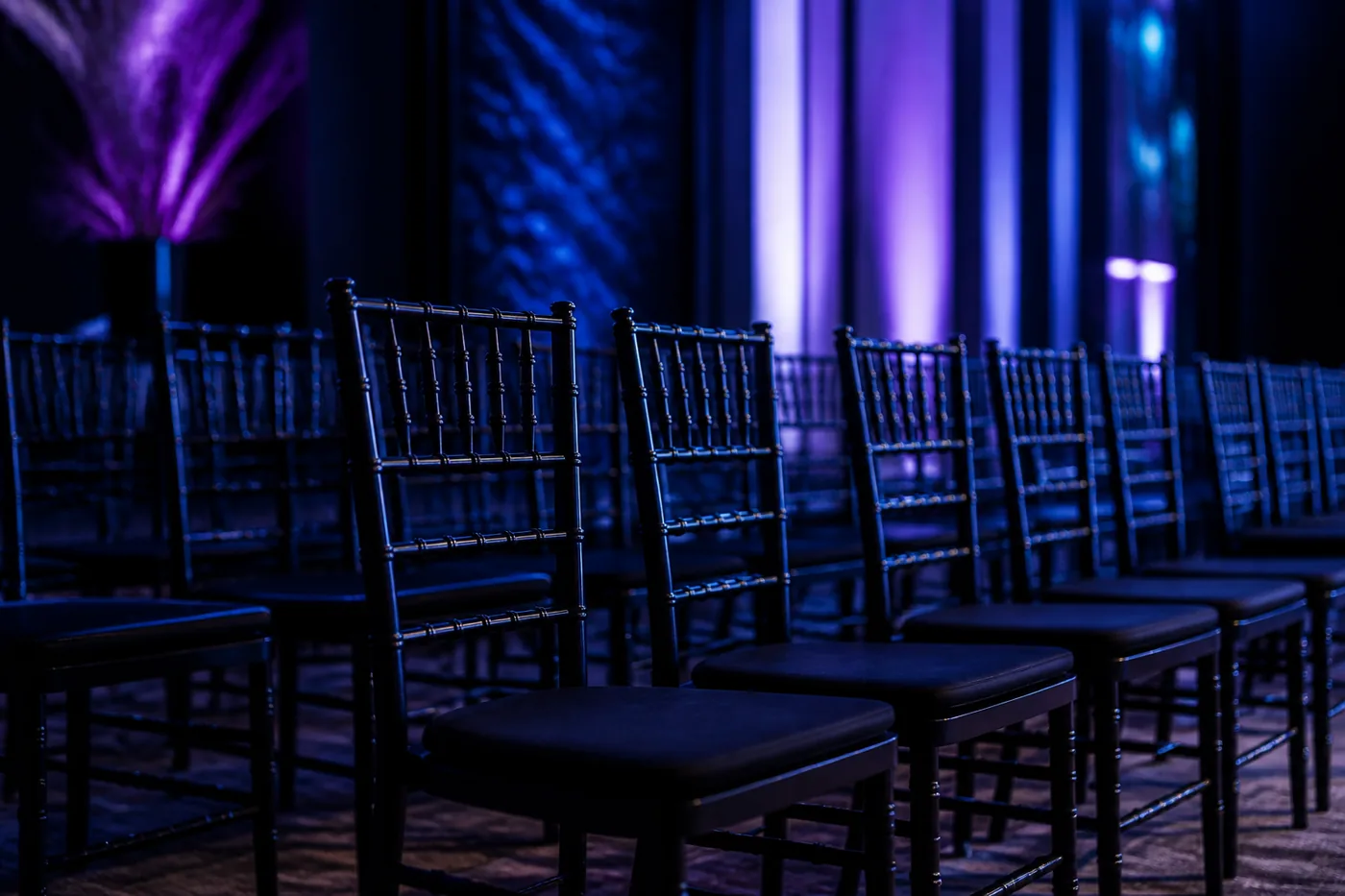
At wholesale volume, resin chiavari chairs run roughly $35 to $55 each and wood chiavaris roughly $45 to $70, with cushions adding $8 to $20 per chair on top. That's the buying answer. The more interesting question (the one venues and rental operators actually wrestle with) is resin versus wood, and whether owning a chiavari fleet beats renting one. We've priced both sides of that trade enough times to give you real answers.
Why is everyone obsessed with this chair?
The chiavari is the prettiest chair in the events business relative to what it costs: slim turned legs, open ladder back, stacks for storage, and photographs beautifully at every wedding on earth. It's also a premium product in the rental market, which is exactly why halls keep asking us whether they should own a fleet and capture that upgrade revenue themselves. Hold that thought; the math is coming.
What do chiavari chairs cost to buy?
Real ranges at meaningful quantities (50-plus chairs):
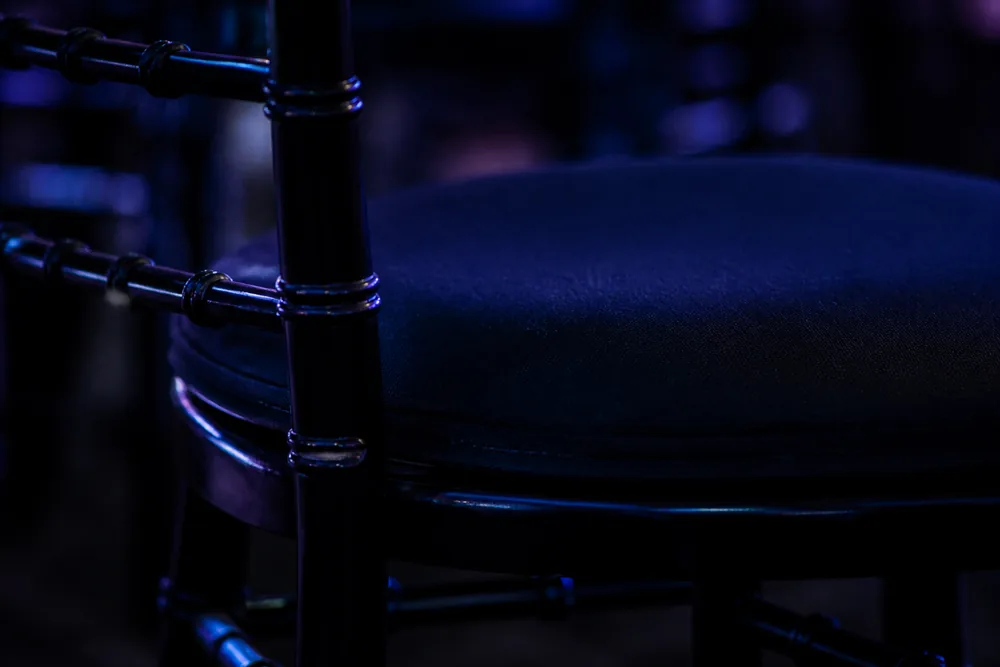
- Resin chiavari: $35–$55 per chair. One-piece or reinforced molded construction, integrated or steel-core frames at the upper end. Color runs through the material, so scratches don't show the way chipped paint does.
- Wood chiavari: $45–$70 per chair. Traditional beechwood or similar hardwood, finished and lacquered. The classic look, the classic maintenance.
- Cushions: $8–$20 depending on fill and cover quality. Budget them. Nobody does a chiavari event without cushions, and cushion covers are a consumable.
- Aluminum chiavaris exist at the premium end for heavy-duty outdoor rental duty; they cost more than resin and earn it only in punishing use cases.
Quantity breaks behave like any volume seating buy, with meaningful steps around 50, 100, and 300 chairs and freight quoted separately at 8 to 15 percent of the order. The whole negotiation playbook is the same one we wrote up in buying banquet chairs in bulk: buy through the nearest break, get landed pricing, order a sample first. With chiavaris the sample matters even more, because build quality varies wildly behind identical product photos.
Resin vs wood: which should you actually buy?
We've supplied both. Here's the honest scorecard:
- Durability: resin wins, clearly. Rental duty is brutal: trucks, stacking, rain, dance floors. Wood chiavaris chip, loosen at the joints, and need touch-up paint and re-gluing as a scheduled maintenance line. Good resin chairs shrug off most of it and the color hides scars.
- Looks: wood wins, narrowly, and mostly up close. In photographs, which is where wedding decisions get made, good resin is nearly indistinguishable. Planners can tell in person; guests mostly can't.
- Weight and handling: about even, both light enough to move in stacks, though resin tolerates careless stacking far better.
- Weather: resin, no contest. Wood chiavaris and sprinklers, dew, or surprise rain end badly.
- Price: resin is 15 to 25 percent cheaper like-for-like, and its lifetime cost advantage is bigger than the sticker gap because of maintenance.
Our rule of thumb: rental fleets and high-volume venues buy resin; wood is for owners who control the environment: a hotel ballroom fleet that never leaves the building, or a venue whose brand genuinely trades on the real-wood detail. If you're torn, buy one of each as samples and abuse them for a week. The decision usually makes itself.
Do chiavari fleets pay for themselves? (The rental math)
Here's the calculation we run with venue owners. Chiavari upgrades in most markets rent somewhere in the range of $5 to $10 per chair per event. That's what your clients are currently paying an outside rental company, or what you could charge as an in-house upgrade over your standard banquet chair.
Take a mid-case: a $45 resin chiavari that earns $7 per event as an upgrade charge. Seven events per chair and the chair has paid for itself. After that it's margin, less cleaning, storage, and the occasional replacement. A hall running 100 chiavari-upgrade events over a few years isn't buying chairs; it's buying an annuity.
The honest caveats, because there are always caveats:
- Only count events that would actually pay the upgrade. If your clientele books the standard chair 90 percent of the time, the fleet sits.
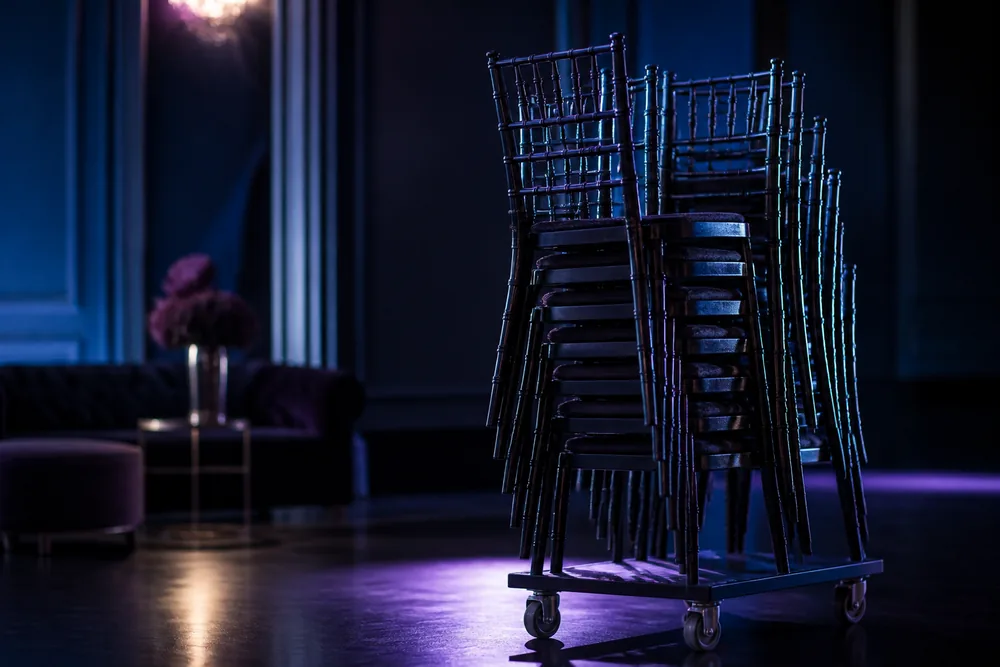
- Storage is real. A second 200-chair fleet needs the same closet math as the first: stacking heights, dollies, square footage. Our banquet chair storage guide applies double when you own two fleets.
- Cushions are a consumable. Covers wear, stain, and walk away. Budget replacement covers annually.
- Damage rate is higher than banquet chairs because chiavaris travel to patios and lawns. Resin blunts this; nothing eliminates it.
There's also a quieter revenue line venues forget: renting your own fleet outward. A hall with 200 chiavaris and a slow-season calendar can rent to planners and neighboring venues on off weekends. Suddenly the fleet earns on days the building doesn't. It requires transport discipline and a damage deposit policy with teeth, but we know venues where the outbound rental line quietly out-earns the upgrade line.
Run your own bookings against that payback math before buying. If the number of upgrade-paying events per year times the fleet size doesn't clear the purchase price within two to three years, keep renting and keep your closet.
What are the alternatives if chiavari isn't the look?
The chiavari owns the wedding market, but it's not the only premium event chair, and the economics above apply to all of its cousins:
- Crossback (X-back) chairs: roughly $45–$80 at volume. The rustic-wedding staple: wood or resin-and-metal versions, same resin-versus-wood logic as chiavaris, and currently the strongest challenger for upgrade revenue in most markets.
- Ghost chairs: roughly $40–$75. Clear polycarbonate, modern look, no upholstery to maintain, but they scratch visibly with rental miles and scratched ghost chairs can't hide it. Better for owned-venue duty than hard rental rotation.
- Folding resin "wedding" chairs: roughly $25–$45. The garden-ceremony standard, lighter duty and lighter price; they fold flat, which transforms the storage math.
If your market's planners are asking for one of these by name, the payback calculation is identical. Swap in the local rental rate and run the same arithmetic. The mistake is buying two specialty fleets at once because both are pretty. Let bookings vote first.
How do chiavaris fit into a full venue fleet?
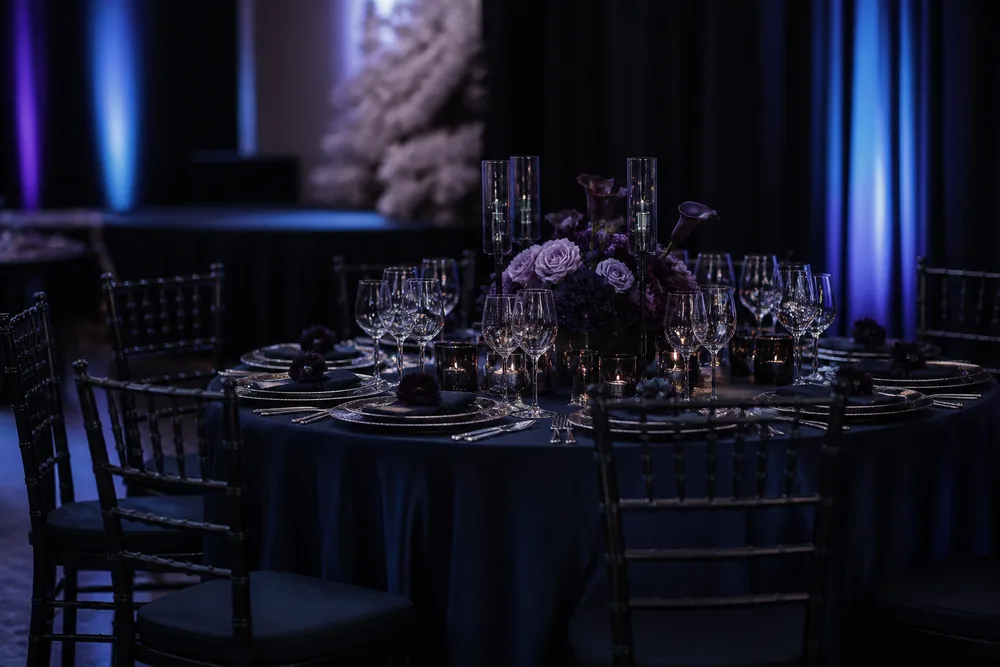
For most halls, chiavaris are the second fleet, the upsell layer over your workhorse stacking banquet chairs, not a replacement for them. Chiavaris are lighter-duty by design: lower weight ratings than commercial banquet chairs, less forgiving of daily-flip abuse, and the armless slim profile that makes them pretty also makes them less comfortable for a four-hour conference. Corporate bookings and long seminars want the padded banquet chair; weddings want the chiavari; your storage room wants you to think hard before owning both.
If you're building the whole fleet from scratch, start with the room math (our 200-guest table math guide sizes the core fleet), then price it honestly with the banquet furniture cost guide, and treat the chiavari layer as the expansion you add once bookings prove the upgrade demand.
The buying checklist
Before a chiavari order goes anywhere near a deposit:
- Sample chairs from your final two suppliers: sit, stack, scratch, and wobble-test them
- Resin vs wood decided on duty cycle, not on the showroom
- Weight rating in writing. Good chiavaris are rated for commercial use; the flimsy ones are the lawsuits
- Cushions and spare covers on the same PO
- Spares at 5 to 10 percent. Chiavari finishes and resin tints drift between production runs, and a mismatched top-up order shows
- Landed freight pricing, always
If you'd rather skip straight to honest numbers: chiavaris are one of the most-quoted items in our banquet seating range, and we know which resin actually survives rental duty. Send us your quantity and your use case, whether it's a venue fleet or rental inventory, and we'll tell you what we'd buy and what it really costs delivered.