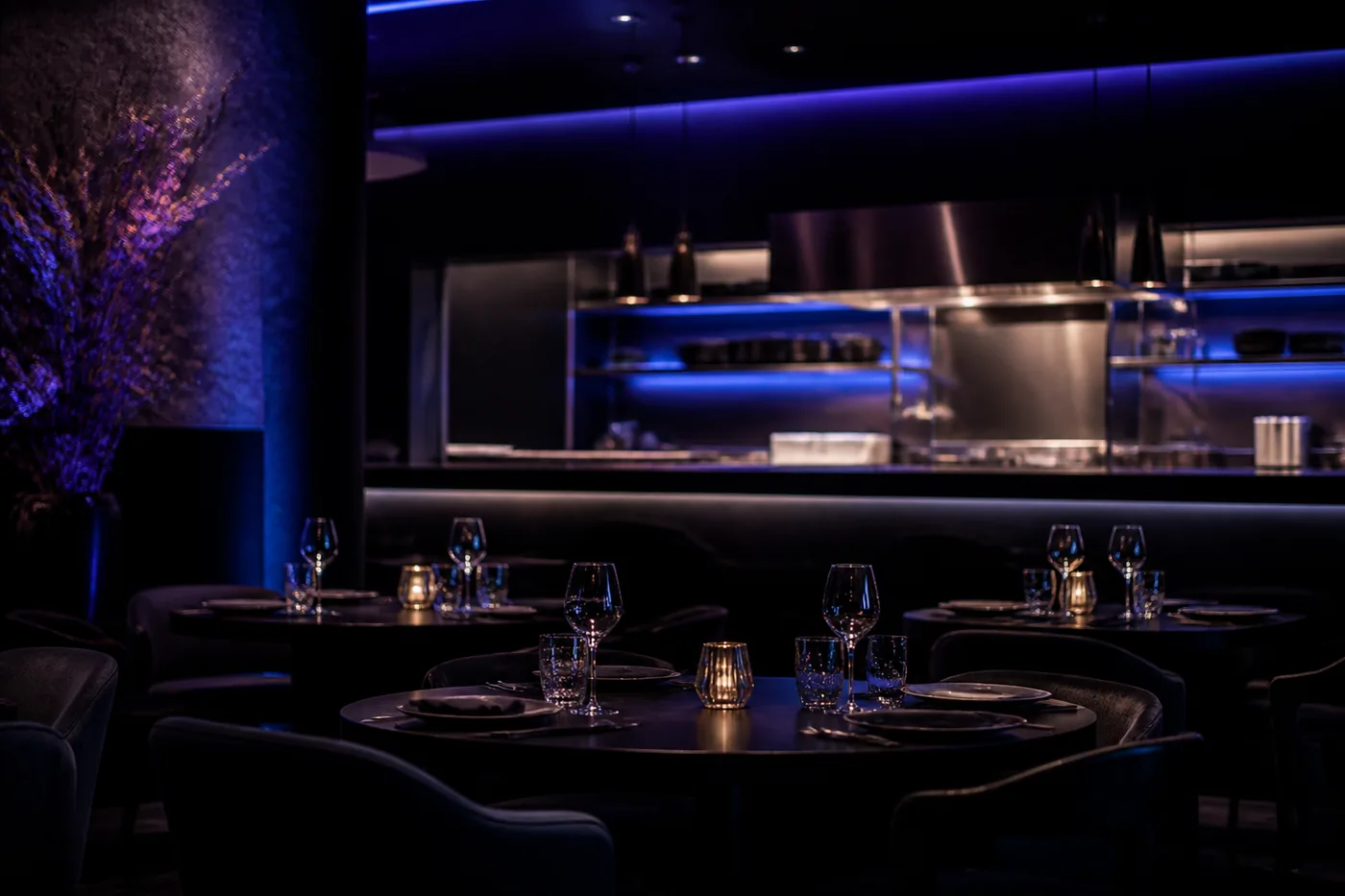
Food service FF&E is all the furniture, fixtures, and equipment a food operation needs to run — and in practice it splits cleanly into two packages that are bought from completely different industries: the back-of-house package (cooking, refrigeration, prep, warewashing) and the front-of-house package (seating, tables, service stations, decor). We've spent years outfitting restaurant openings across both packages, and the single most useful thing we can tell you is to treat them as two projects with two budgets and two timelines from day one.
What counts as FF&E in food service?
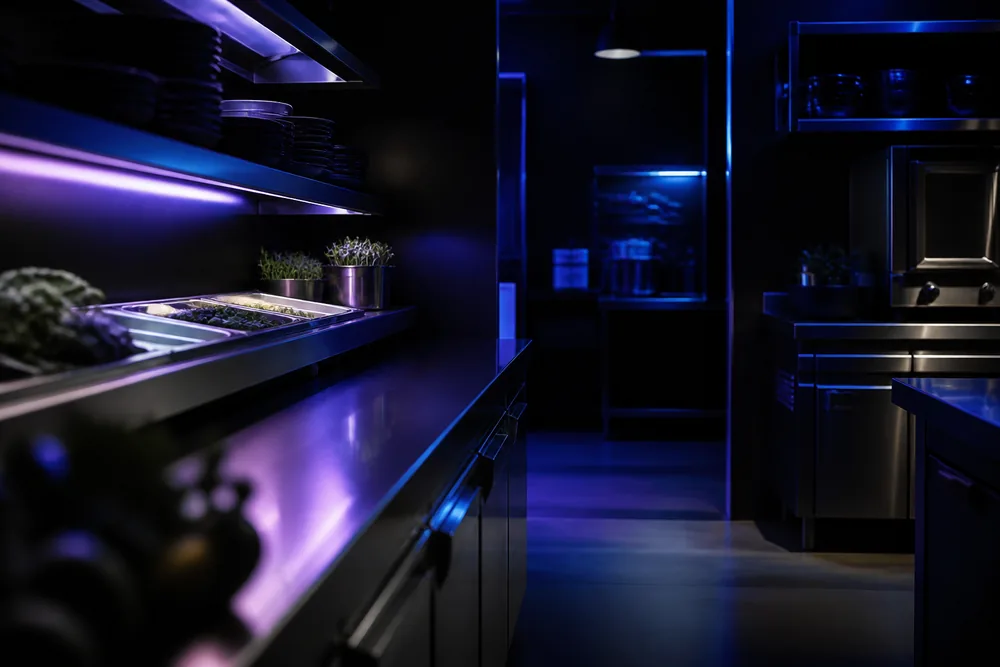
Back of house (the kitchen package):
- Cooking line — ranges, ovens, fryers, griddles, salamanders
- Refrigeration — walk-ins (freestanding), reach-ins, undercounter units, prep tables
- Prep and warewashing — mixers, slicers, worktables, sinks, dish machines
- Storage — dunnage racks, shelving, ingredient bins
- Ventilation hoods (often FF&E, though installed by contractors — the classic gray-zone item)
Front of house (the dining package):
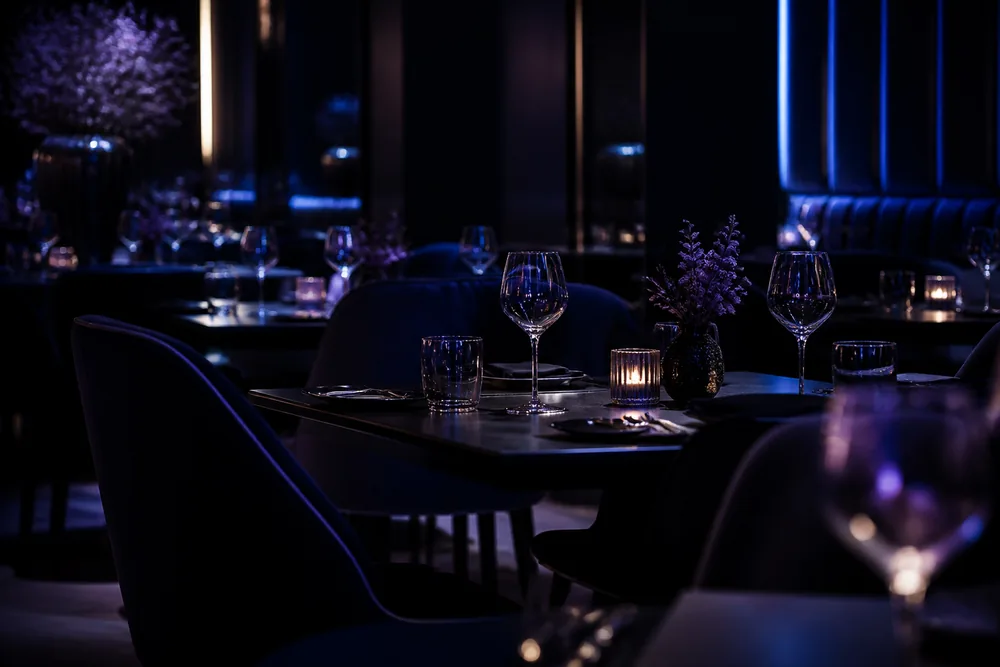
- Chairs, barstools, booths, banquettes (freestanding)
- Table tops and bases
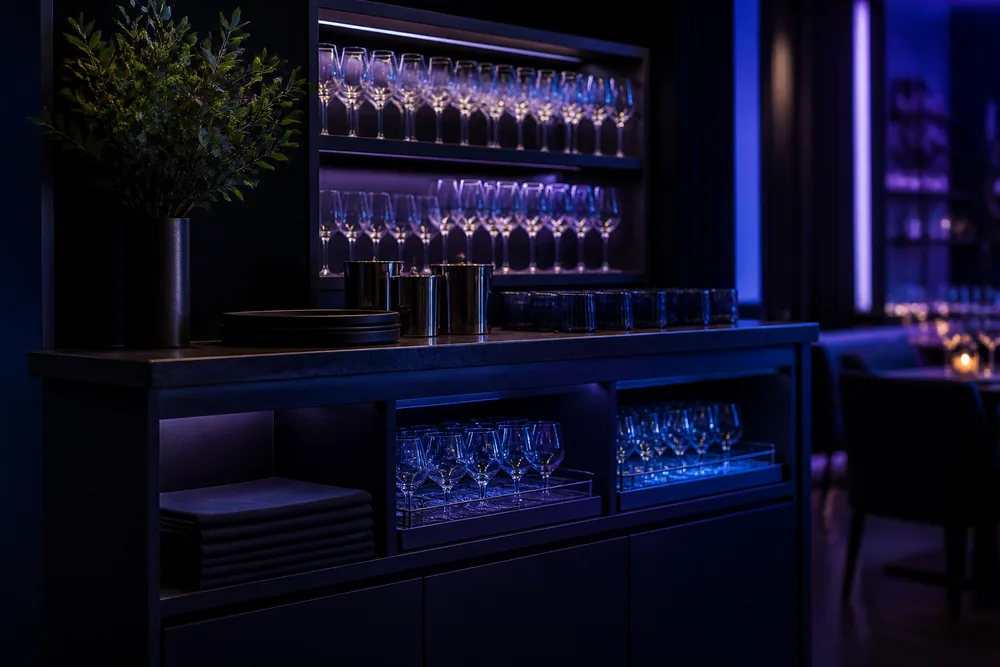
- Host stands, wait stations, back bars, display cases
- Patio furniture if you have outdoor seating
- Decor, lighting (plug-in), artwork, planters
Usually NOT FF&E: built-in millwork, site-built banquettes, flooring, wall finishes, plumbing and electrical rough-in, the hood installation. Those live in the construction budget as leasehold improvements — and the split matters at tax time, which we cover in the depreciation guide.
Who sells food service FF&E?
This is the part that surprises first-time owners: no one company sells you the whole list well.
- The kitchen package comes from food service equipment dealers, often spec'd by a kitchen designer or the dealer's design department. This world runs on quotes against equipment schedules, and brands you'll hear constantly: True, Hobart, Vulcan, Rational.
- The dining package comes from commercial furniture suppliers — a different industry with different lead times, different freight, and different failure modes. That's our world. How to vet those vendors is in our FF&E suppliers guide.
The practical consequence: if your project manager only has a kitchen equipment quote, half your FF&E is unpriced. We've been called in eight weeks before opening by owners who genuinely believed the equipment dealer's number covered "the furniture stuff." It never does.
What does food service FF&E cost?
Honest ranges from projects we've priced, stated per seat for a full-service restaurant:
- Front-of-house furniture: roughly $150–$300 per seat for solid commercial-grade product in a fast-casual to mid-scale room, $300–$600+ per seat when booths, custom banquettes, and upgraded finishes enter. A 100-seat dining room's furniture is realistically a $20K–$50K line, not a $8K line.
- Back-of-house equipment: typically the bigger number — $100K–$250K+ for a full-service kitchen from scratch, wildly dependent on menu, line size, and how much used equipment you'll accept.
Two notes on those numbers. First, compare landed cost — commercial furniture ships bulky, and freight can add 10–20% to the furniture line. Second, the cheapest way to blow both budgets is buying residential-grade furniture or light-duty equipment for a commercial duty cycle; the second purchase always costs more than the first one would have. The test standards that separate real commercial product from marketing copy are in what commercial grade actually means.
What about smallwares — are they FF&E?
Mostly no. Pots, pans, utensils, sheet trays, plates, glassware, and flatware are smallwares — the restaurant world's version of OS&E — and they're typically expensed rather than capitalized, bought from restaurant supply houses, and budgeted separately (commonly $10,000–$30,000 for a full-service opening, which surprises everyone the first time). The practical reason to keep them off the FF&E list is the same as always: different suppliers, different money treatment, different timeline. Smallwares can be bought six weeks out; your booths cannot. One list with three sections — equipment, furniture, smallwares — keeps all three honest.
Should I buy used food service equipment?
For back of house: sometimes, selectively. Stainless tables, shelving, and sinks are nearly indestructible and fine used. Refrigeration and cooking equipment used is a gamble — you're buying someone else's compressor hours with no warranty. Our rule: used for dumb metal, new (or certified refurbished with a warranty) for anything with a motor, a compressor, or a flame.
For front of house: we're more cautious. Used dining chairs have used joints, and chair failure is a guest-on-the-floor event, not a repair ticket. If the budget is tight, buy fewer, simpler, new commercial chairs rather than someone's auction lot. Volume pricing helps more than people expect — see how bulk ordering actually works.
What are the lead times on food service FF&E?
- Stock kitchen equipment: days to 3 weeks, mostly.
- Custom fabrication (hoods, custom stainless): 6–12 weeks.
- Stock commercial furniture: 1–4 weeks.
- Made-to-order seating and booths: 6–12 weeks.
- Imported furniture at container quantities: 12–18 weeks.
The full breakdown with the levers for compressing each is in our lead times guide. The scheduling insight that matters: the kitchen package installs early (it needs utilities connected and inspections passed), while the dining package installs last (it needs finished floors). So the furniture gets value-engineered in a panic more often — protect that budget line early or it becomes the piggy bank.
How do lenders and landlords treat food service FF&E?
Two relationships where the FF&E list stops being a shopping exercise and becomes a legal document:
Lenders. Equipment loans and SBA financing typically treat FF&E as collateral, which means the lender wants an itemized schedule with costs — not "kitchen stuff, $180K." Some financing draws release against invoices, so a clean, itemized procurement paper trail literally controls your cash flow. Leasing is common for back-of-house equipment (especially refrigeration and cooking lines) and rare-to-inadvisable for dining furniture, where the financing costs quickly swamp the asset value. And remember the fine print that trips buyers of existing restaurants: leased equipment isn't the seller's to sell. Verify what's owned versus leased before valuing any FF&E schedule — more on that in what is FF&E.
Landlords. Your lease's fixture clauses decide what leaves with you and what stays at surrender. Freestanding FF&E is yours; things bolted, plumbed, or hard-wired can become the landlord's "leasehold improvements" the moment they attach. The hood system is the classic fight. Read those clauses before the buildout, and where you have a choice between a freestanding and a built-in version of the same function, remember you're also choosing who owns it in five years — and how it depreciates, which is covered in the depreciation guide.
How do I sequence the FF&E buy for a restaurant opening?
The order we run on every opening:
- Menu locks the kitchen. Equipment schedule can't finalize until the menu concept does.
- Kitchen package bids first — longest utility coordination.
- Floor plan locks the seat count — then, and only then, the furniture order is sized. (Seat counts move during design; a chair order placed off an early plan is how you end up with 14 extra barstools.)
- Furniture ordered 12–16 weeks out from target open, with 5–10% spares on chairs.
- Deliveries staged — equipment when utilities are live, furniture when floors are done, and never before there's a lockable place to put it.
Where to start
If you're opening or renovating a food service space, build one combined FF&E list with two sections — kitchen and dining — and get real quotes against both before anyone promises an opening date. The FF&E procurement guide walks the full process.
The dining-room half is exactly what we source for people. Send us your seat count and concept and we'll price the furniture package landed — honestly, including the freight nobody budgets for. We've priced enough openings to know where the surprises hide, and we'd rather show you now than have you meet them in week eight.