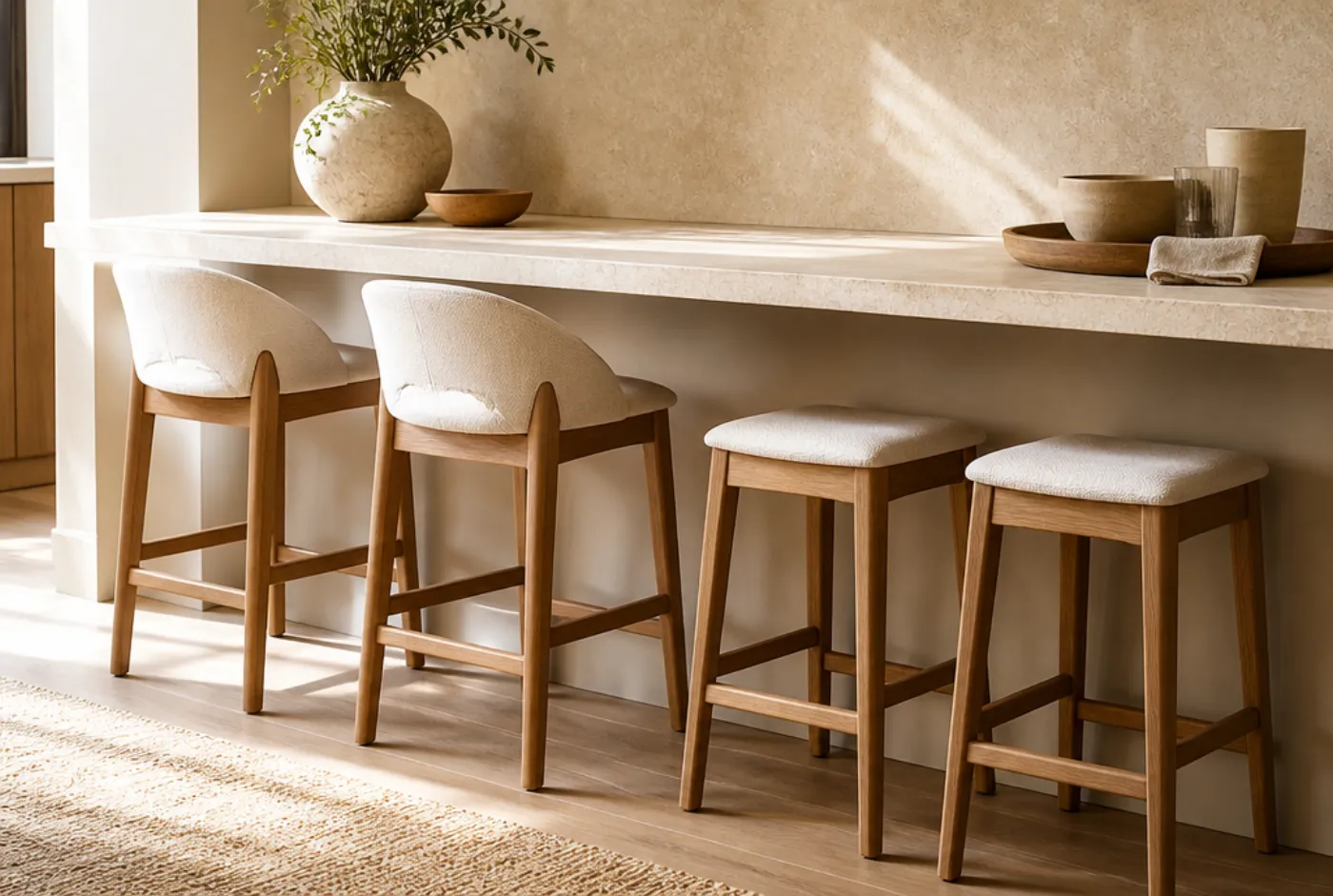
Decide this one on dwell time and linear feet, not on looks. Counter stools with backs support long sits, and they cost you 26 to 30 inches of counter per guest plus 18 to 20 inches of floor depth behind them. Backless stools give you 24 to 26 inches per guest, tuck completely under the overhang when nobody's sitting, and start becoming uncomfortable somewhere around the 30-minute mark. On a 20-foot counter that difference is real: nine backless stools against seven or eight with backs.
We sell far more counter stools with backs than backless ones, and it isn't a stocking accident: most of our clients are running rooms where guests eat, work, or drink for an hour or more, and a back is what makes that hour possible. But the backless case is legitimate and we make it below.
Where the space actually goes
Three dimensions change when you add a back:
- Centre-to-centre spacing. A stool with a back needs elbow room that a backless one borrows from the counter. Plan 26 to 30 inches with backs, 24 to 26 without.
- Footprint depth. A backless stool is typically 14 to 16 inches deep and disappears entirely under a 12-inch overhang. A stool with a back runs 18 to 22 inches deep and its back rail never tucks. That projection lands in your circulation.
- Clearance behind. You want roughly 36 inches of clear passage behind an occupied stool row for staff and guests to pass. With backs, measure that 36 inches from the back rail, not from the counter face, which means a counter run against a wall aisle often can't take backs at all without choking the route.
That last point kills more back-stool orders than price does. Measure the aisle before falling in love.
What backs actually buy you
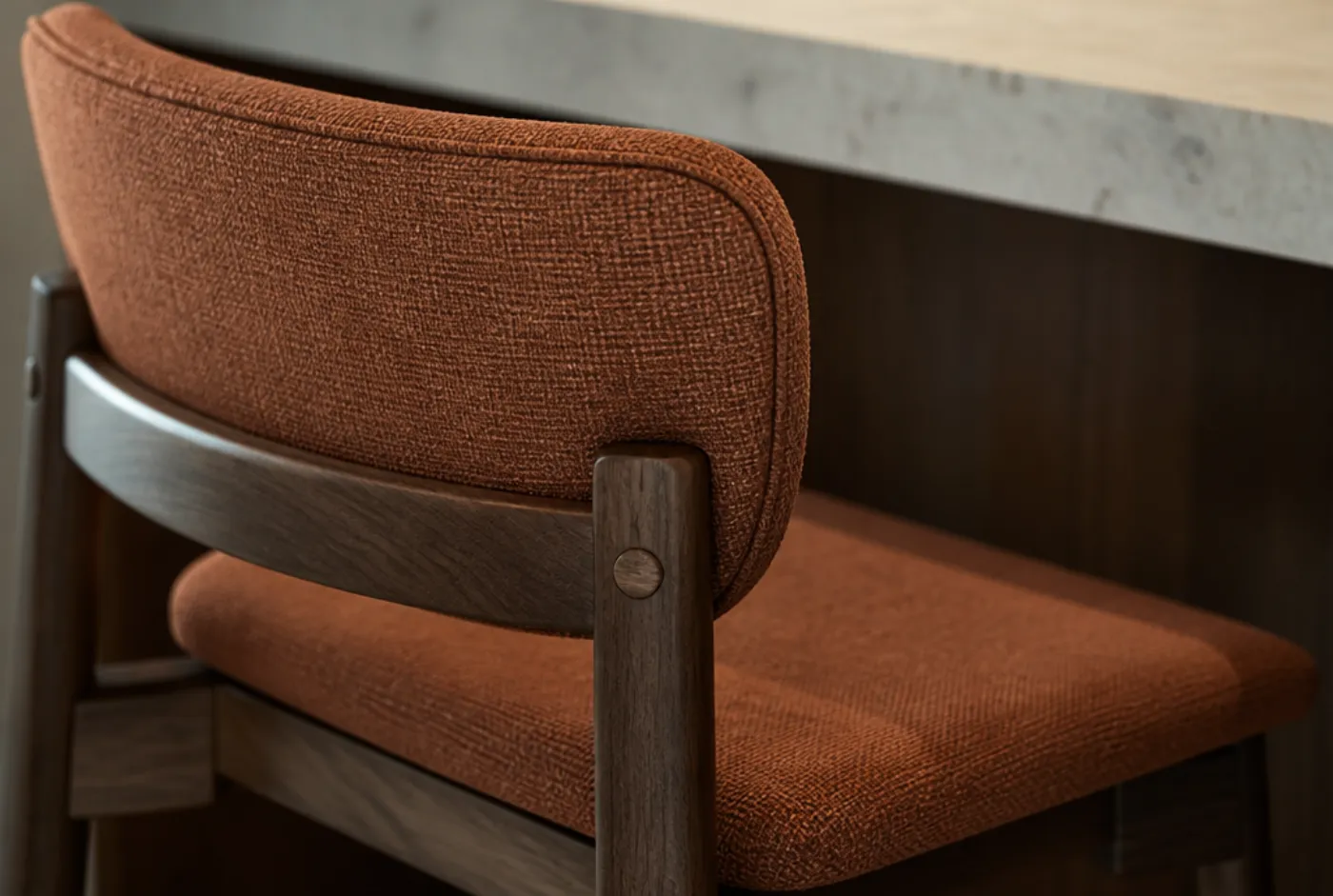
Time at the counter. A guest with lumbar support stays. A guest perched on a backless disc starts shifting at twenty minutes and leaves at forty. If your counter is where people eat entrees, work on laptops, or drink a second round, backs pay for themselves in check average.
A wider range of guests. Backs make counter seating usable for older guests and anyone with back trouble, which is a much bigger share of your room than the design mood board assumes.
Perceived quality. A room of backless stools reads casual and transactional; a room of upholstered back stools reads like somewhere you'd book. Neither is wrong; both are messages.
A place to lean. Guests at a bar turn sideways to talk. A back rail is what they lean on to do it, and a room without one has everyone hunched forward.
What backless buys you
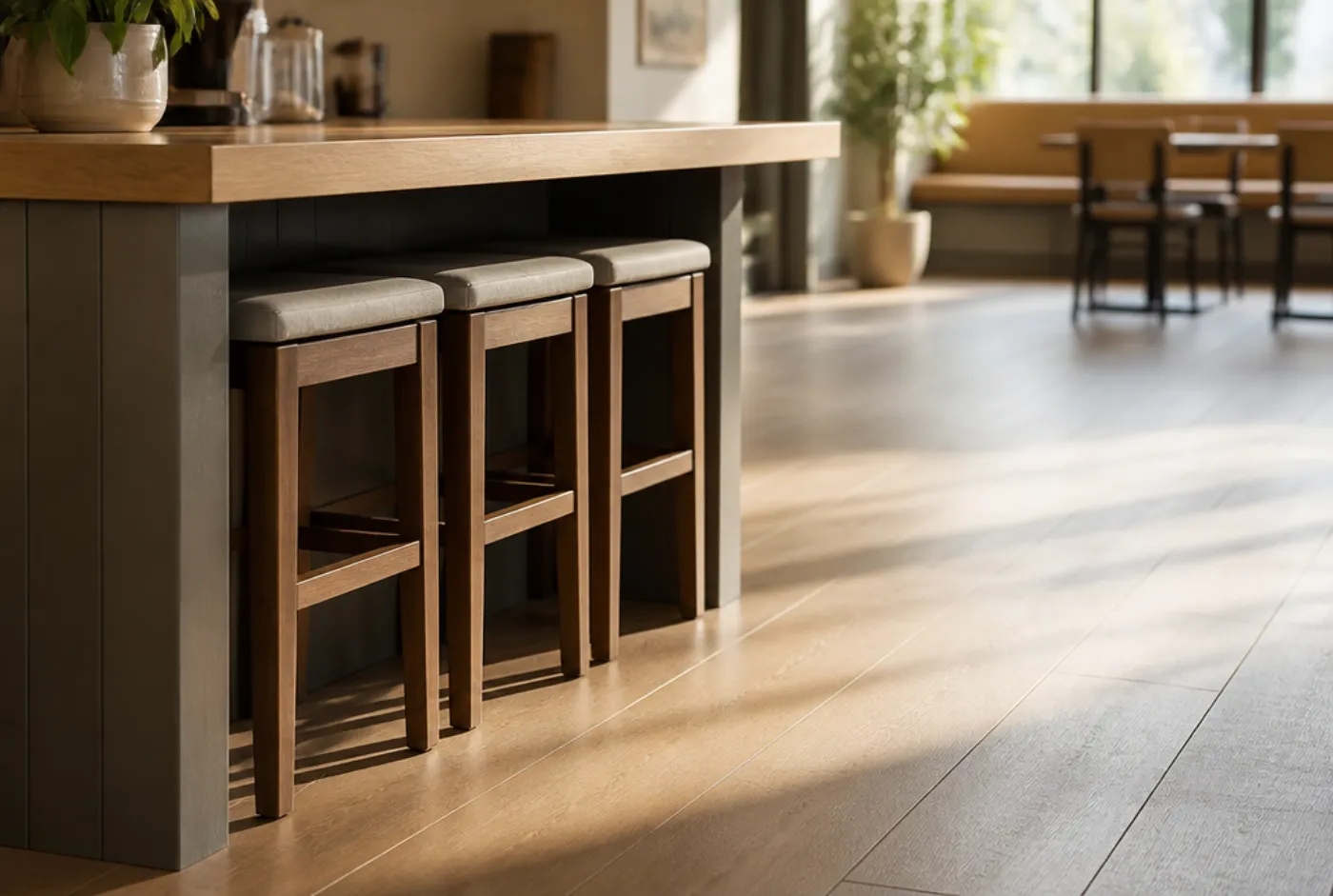
Seats per foot. Two more stools on a 20-foot run, every night, forever.
A clean sightline. Backless stools keep a bar-back display, a pastry case, or a window view unbroken. In a small room the visual difference is dramatic: a row of back rails at 40 inches high walls the space in half.
Turnover. Sometimes discomfort is the strategy. Quick-service counters, ordering rails, coffee bars where the goal is a fifteen-minute sit: backless does exactly what you want.
Storage and cleaning. Fully tuckable stools mean a mop can pass, a floor scrubber can pass, and the closing crew doesn't spend twenty minutes lifting seating. Over a year that's real labour.
Fewer things to break. A back is a lever arm bolted to a seat. Guests lean back on it, rock on it, and hang heavy bags off it. On upholstered back stools, the seat-to-back joint and the back upholstery panel are the two most common warranty items we process. A backless stool has a seat, a frame, a footrest, and glides: four things, all simple.
Cost, honestly
Expect a stool with a back to run roughly 20 to 40 percent more than a comparable backless model in the same frame family, and more than that if the back is upholstered or wood-formed. On a 30-stool order that's a meaningful line, though it's rarely the deciding one against the revenue difference dwell time makes. Where it does decide things is in a phased build-out; the broader budgeting picture is in our restaurant furniture cost guide.
Add one line most people forget: replacement parts. Back stools have more failure modes, so order spares accordingly. On any run over twenty stools we suggest one or two complete spares plus a bag of glides, regardless of style.
What we'd spec, by room
- Coffee shop window rail: backless. Short sits, clean sightline, tucks for cleaning. Pair it with the rest of the coffee shop package.
- Restaurant counter serving full entrees: backs. Guests are there for 60 to 90 minutes and their spine has opinions.
- Cocktail bar: backs, ideally low ones (enough lumbar support to sit an hour, low enough to keep the back bar visible over them).
- Hotel lobby work counter: backs, and upholstered ones. Business guests sit for hours and it's a differentiator.
- Brewery communal counter: either, and a mix reads well (backs along the wall side, backless along the aisle side where circulation is tight). See the commercial bar furniture range for pieces that coordinate across both.
- Grab-and-go or ordering rail: backless, no question.
The middle option
Low-back and saddle-back stools sit between the two: a short back rail that supports the lumbar without the full 40-inch silhouette. They tuck further than a full-back stool, keep sightlines mostly intact, and read less institutional. They cost close to full-back pricing, so pick them for the design and the sightline, not the budget. In tight rooms where we need both circulation and dwell time, this is usually where we land.
Whichever way you go, the seat height decision runs first and separately; get that wrong and neither style works. That math is in our counter stool height guide.
The short version
Backs for dwell time, comfort, and a room people settle into, at 26 to 30 inches per guest and a footprint that projects into your aisle. Backless for seat count, sightlines, cleaning, turnover, and fewer parts to break, at 24 to 26 inches per guest. Measure the aisle behind the stools before you decide anything else.
Working out a counter right now? Send us the linear feet, the aisle width, and how long you want people to stay. We'll come back with a stool count and both versions priced, so the trade-off is a number instead of a hunch.