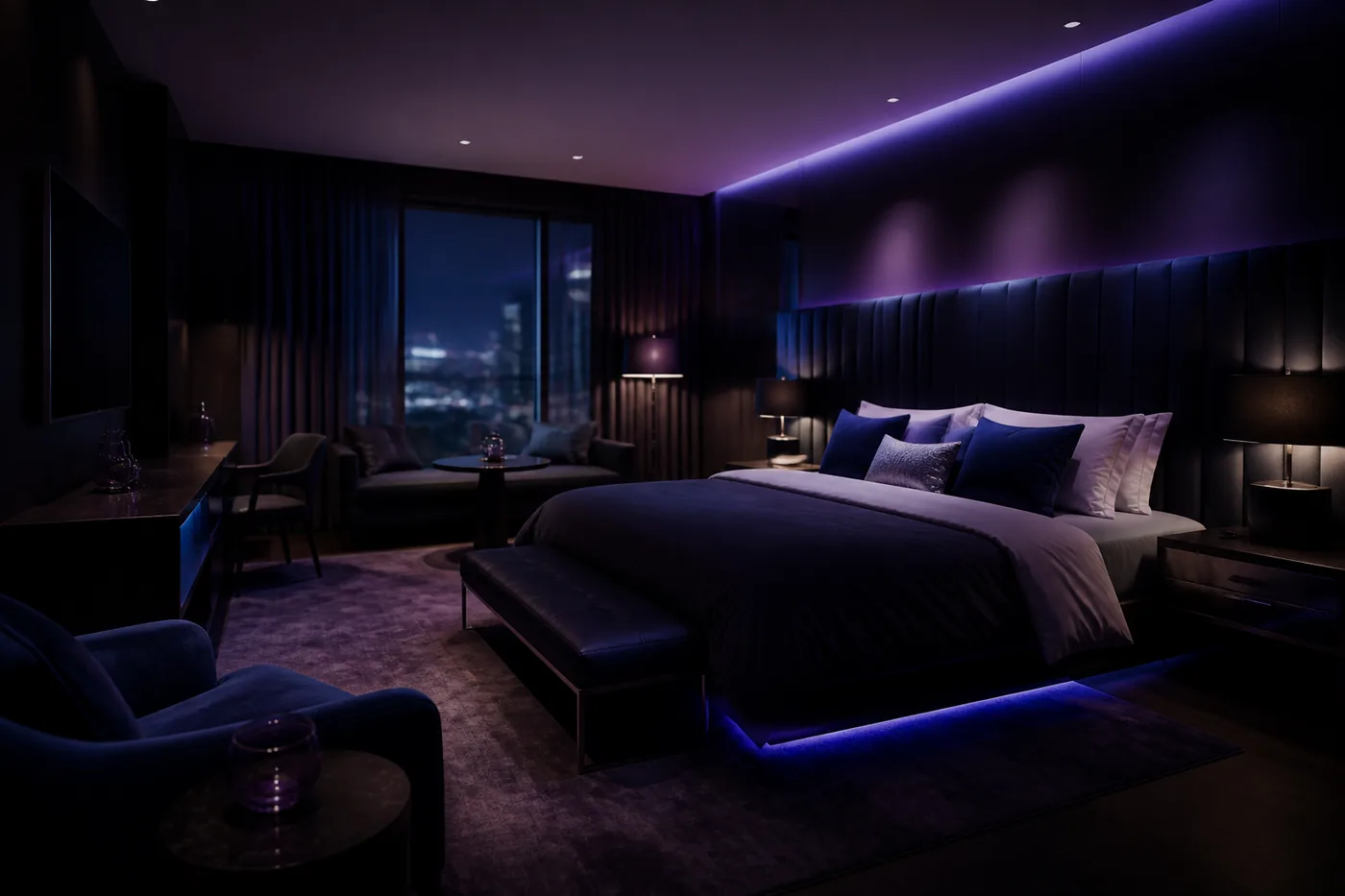
A hotel guest room runs on a remarkably standard kit: bed base and headboard, one or two nightstands, a dresser or TV console, a desk and desk chair, a lounge chair or sleeper, a luggage bench, lamps, and window treatments. What separates a room that still looks right at year seven from one that's embarrassing at year three isn't the design — it's a handful of spec decisions made at the PO stage.
We've spent years writing those POs for hotel projects. Here's the room, piece by piece, with the details that actually matter.
What are hotel casegoods, and what should they be made of?
Casegoods are the hard pieces — nightstands, dressers, desks, consoles, headboard panels. This is where material choice decides lifespan, so here's the plain-English materials talk:
- HPL (high-pressure laminate) over an engineered core is the workhorse of hotel casegoods, and we'll defend it in any argument: it shrugs off water glasses, luggage corners, and cleaning chemicals better than any wood finish at the price. Modern woodgrain HPL is good enough that guests don't clock it.
- TFL / melamine (thermally fused laminate) is a step down in impact and moisture resistance — acceptable for vertical surfaces and budget tiers, risky for tops.
- Wood veneer looks and warms up a room like nothing else, and requires honest expectations: it will show water rings and luggage scars, and it needs a quality catalyzed finish to survive housekeeping chemistry. Upscale and boutique tiers use it with eyes open.
The two spec lines we never compromise, whatever the surface: 3mm PVC or ABS edgebanding on exposed edges — thin edge tape peels within a couple of years and instantly reads "tired" — and moisture-resistant construction at the tops, because every horizontal surface in a hotel room eventually hosts a sweating ice bucket.
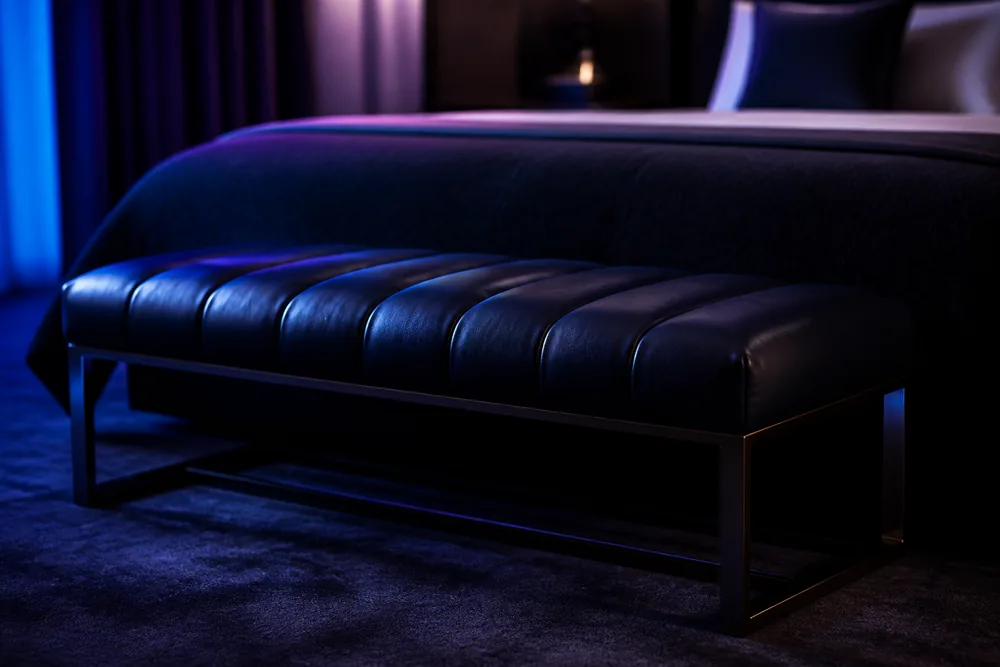
What about the bed — what does the hotel actually buy?
The mattress set is usually its own program (often brand-mandated), but FF&E buys the frame or base and the headboard:
- Bed base: most properties now use simple metal platform frames or upholstered box bases. Spec the boring thing here — guests never see it, housekeeping fights it daily. Clearance for robot vacuums and stored luggage is a real modern consideration; so is no clearance at all (fully enclosed bases) to eliminate under-bed cleaning entirely. Pick one philosophy on purpose — housekeeping minutes per room are real money at 365 turns a year, and the bed base decides more of them than any other piece.
- Headboard: almost always wall-mounted rather than bed-attached — it stays put when housekeeping moves the bed, and it can't rattle. Upholstered headboards are the current default; spec contract-rated, cleanable fabric, because heads and hair product touch it every night. Wood and laminate panels win on cleanability in economy tiers.
What's the deal with hotel desks now?
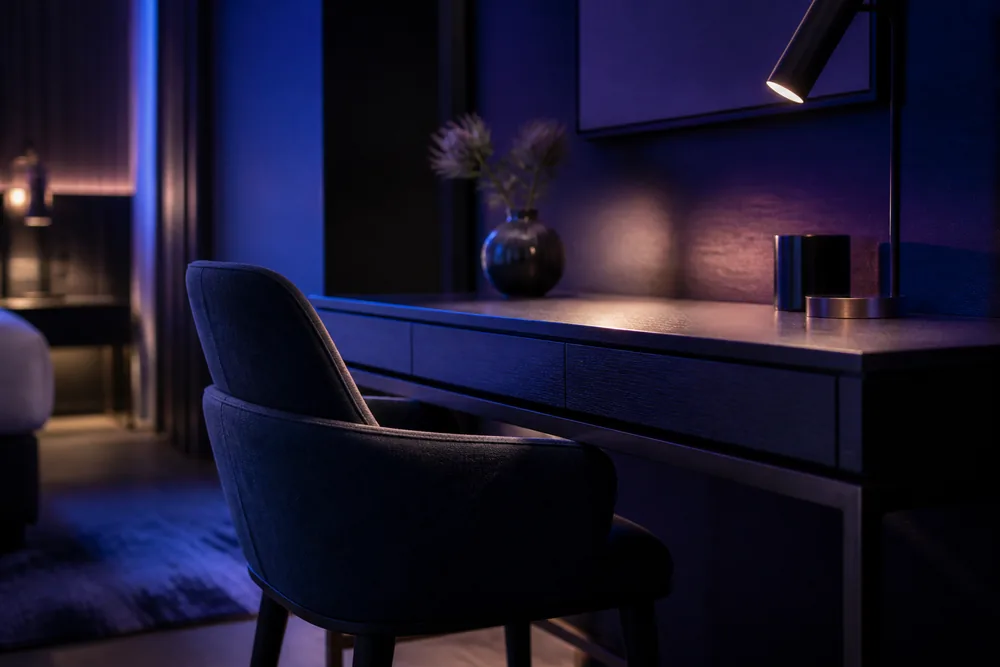
The desk survived the "nobody works in rooms anymore" prediction — it just shrank. Current practice: a 36–42 inch desk (down from the old 48–60), often ganged with the console or wall-mounted, with power and USB on top of the desk, not behind it. If we could enforce one rule industry-wide it would be that one: no guest should ever crawl under a desk to charge a laptop. The desk chair should be a real task chair or a well-built armless upholstered chair — it's the hardest-working seat in the room.
Which seating goes in a guest room?
Typically one lounge piece: a club chair with ottoman, a small sofa, or a sleeper in double-queen and suite configurations. Spec notes from experience:
- Fabric is the whole ballgame. Contract-rated (commercial abrasion and flammability specs — details in what commercial grade means), dark-enough or patterned-enough to forgive real life, and cleanable with what your housekeeping team actually uses.
- Sleepers earn their money in suites and family-market properties and cost 2–3x a lounge chair — put them where the market data says families book, not everywhere.
- Arms and seat height matter for older travelers — a too-low, too-soft lounge chair is a trap. Seat height around 18 inches with firm support serves every demographic.
What dimensions and clearances actually matter?
The numbers we check on every floor plan before releasing casegoods POs:
- Walkways: 30 inches minimum beside the bed and along the foot path; rooms tighter than that get furniture damage from luggage traffic, guaranteed.
- Nightstand height: within an inch of mattress-top height. The mattress program and the nightstand spec must be decided together — we've seen 27-inch nightstands land beside 31-inch mattress builds and make an expensive room look wrong forever.
- Dresser/console depth: 18–20 inches typical; at 24 inches walkways die in standard-width rooms.
- ADA rooms have their own furniture spec — clearances (30x48 approach spaces), reachable controls, and often different bed heights. Count them, spec them separately, and don't let them be an afterthought at the receiving dock.
What about lighting, mirrors, and window treatments?
The kit isn't complete without the three categories that ride along on every guest room PO:
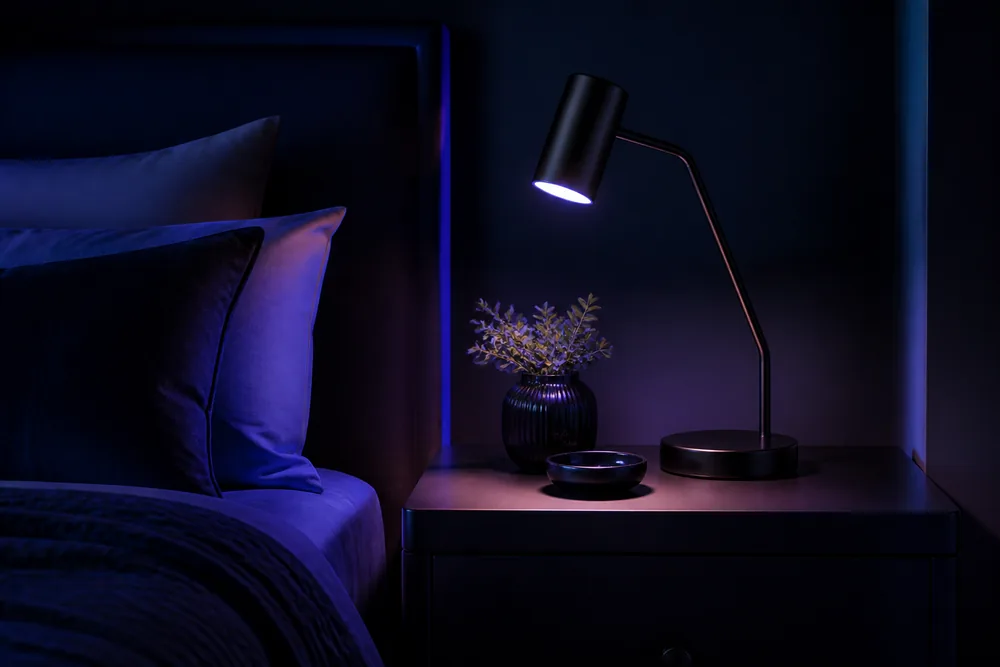
- Lighting: typically five to seven fixtures per room — two nightstand lamps (or wall-mounted sconces, which free the nightstand top and can't be knocked off it), a desk lamp, a floor lamp at the lounge chair, plus overheads. The spec details that matter: switching a guest can find in the dark, USB and outlet integration in the lamp bases (retrofitting power later costs multiples), and bulb standardization across the whole property so engineering stocks one bulb, not nine. Wall-mounted anything also means blocking coordinated with construction — another reason lighting POs and framing schedules have to meet each other early.
- Mirrors: a full-length somewhere guests dress and a well-lit one at the vanity, minimum. Framed mirrors are FF&E; the giant glued-to-the-wall bathroom mirror is usually construction. Decide which yours is before both budgets assume the other bought it.
- Window treatments: the sleeper category — literally. Blackout performance is the most-commented-on furniture-adjacent feature in guest reviews, and it's decided by spec: real blackout lining, returns that wrap the window edge, and overlap at the center meet. Drapery is sewn product with its own workroom lead times, and it's measured after windows are finished, which puts it dangerously late on every schedule. Order the fabric early, sew late, and never let the drapery package be an afterthought — a perfect room with light leaking around cheap panels reviews like a bad room.
How much does guest room furniture cost, and how long does it take?
Per-key ranges and the budgeting method live in the hotel furniture cost guide, but the shape: economy rooms furnish in the mid four figures per key, midscale roughly $8K–$15K, upscale well beyond. Casegoods at hotel volume are typically overseas production — call it four to six months from PO to dock, protected by a signed-off model room before anything multiplies by your key count. The model-room ritual and the whole buying sequence are in the hotel FF&E procurement guide.
And the spec detail that saves future-you: attic stock. Order 2–5% extra casegoods and seating with the original run. Hotel finishes are custom runs; the replacement dresser you need in year four does not exist unless you bought it in year zero.
The short version
Guest room furniture is a solved kit with unforgiving details: HPL or honest veneer with 3mm edges, wall-mounted cleanable headboards, smaller desks with topside power, contract fabrics everywhere, nightstands matched to mattress height, ADA rooms specified on purpose, and spares bought up front.
If you're furnishing rooms — six of them or two hundred — send us your room mix and we'll price the kit landed, with the spec details already argued about so you don't have to learn them the year-three way.