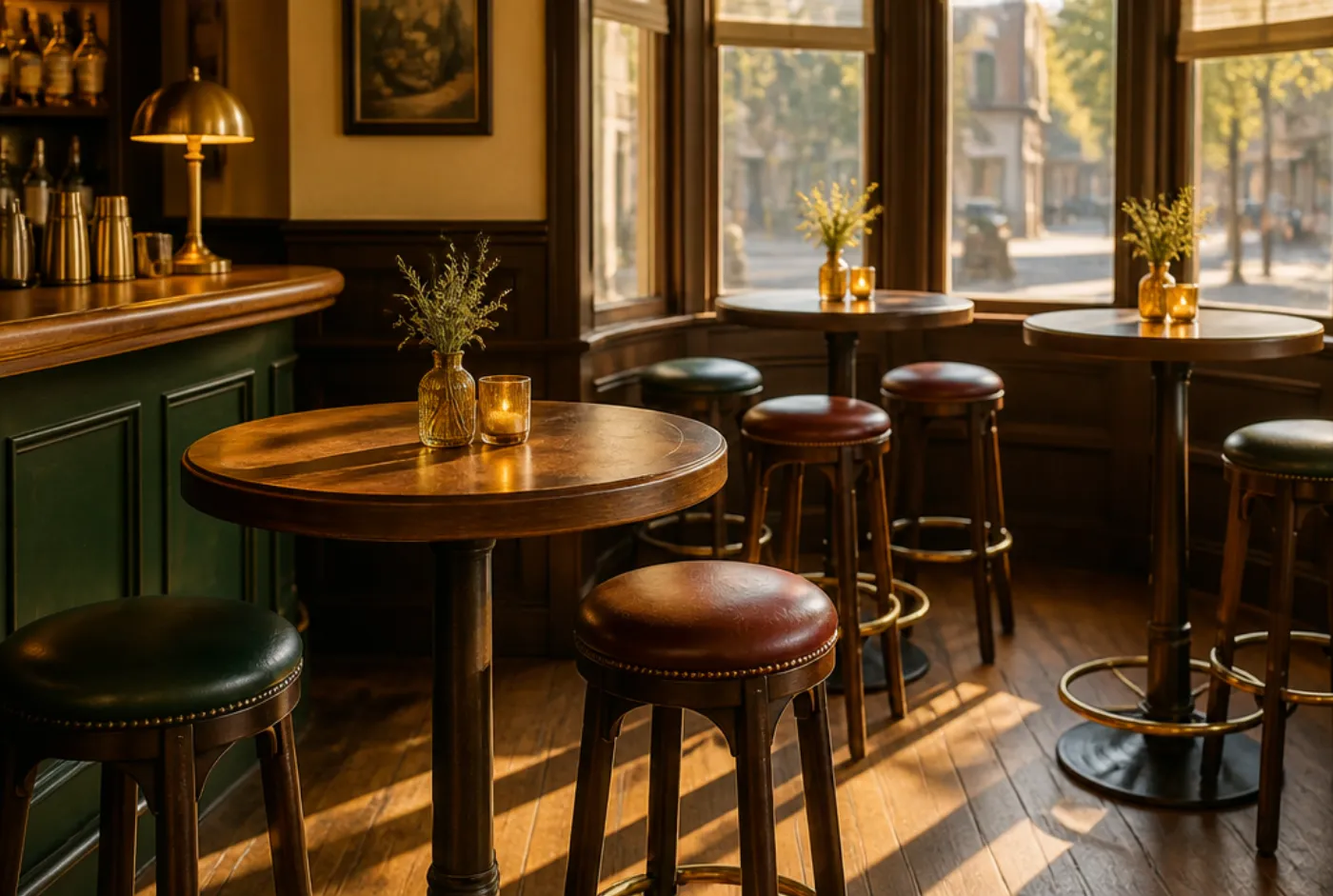
In commercial furniture, a pub table and a bar table are the same thing: a table with a finished height of 40 to 42 inches, taking stools with seats at 28 to 30 inches. The words are used interchangeably by nearly every manufacturer, distributor, and catalogue in the trade. If someone quotes you a pub table and someone else quotes a bar table, you are almost certainly comparing the same product.
Almost. The exception is worth the price of the whole article: in the residential furniture trade, "pub height" and "gathering height" are sometimes used for 36-inch counter-height tables sold as a set with 24-inch stools. Order a "pub table" from that world into a commercial room stocked with 30-inch stools and you've bought a table six inches too short for its seating. We build every quote for bar height tables from the inch measurement for exactly this reason, and we recommend you do the same.
The full vocabulary, decoded
Same height, different words, roughly in order of how often we hear them:
- Bar table / bar height table: 40 to 42 inches. The industry-neutral term.
- Pub table: the same, in hospitality usage. British-influenced, and the most common phrase from operators rather than specifiers.
- High top: the same, in restaurant-operator usage. Usually implies a smaller round or square top with stools.
- Highboy: the same, in events and catering usage. Usually implies a standing round with no stools at all.
- Cocktail table: ambiguous and dangerous. In events it means a standing highboy at 42 inches. In hotel and lounge furniture it means a low coffee table at 16 to 18 inches. Never accept this phrase without a dimension.
- Poseur table: the UK term for a highboy. You'll see it on imported spec sheets.
- Bistro table: usually dining height, 28 to 30 inches, small round top, though some catalogues apply it to bar height too. Another one to pin down.
- Gathering table / counter height table: 34 to 36 inches, a different height class entirely.
One more source of confusion: "bar table" occasionally refers to the bar itself (the service counter guests sit at) rather than a freestanding table. Contractors and millworkers use it this way. When the word appears in a construction document rather than a furniture quote, check which one is meant before pricing anything.
Where the products genuinely diverge
Height aside, there is a real difference between what's usually sold as a "pub table" and what's usually sold as a commercial bar-height table, and it's about how the thing is assembled.
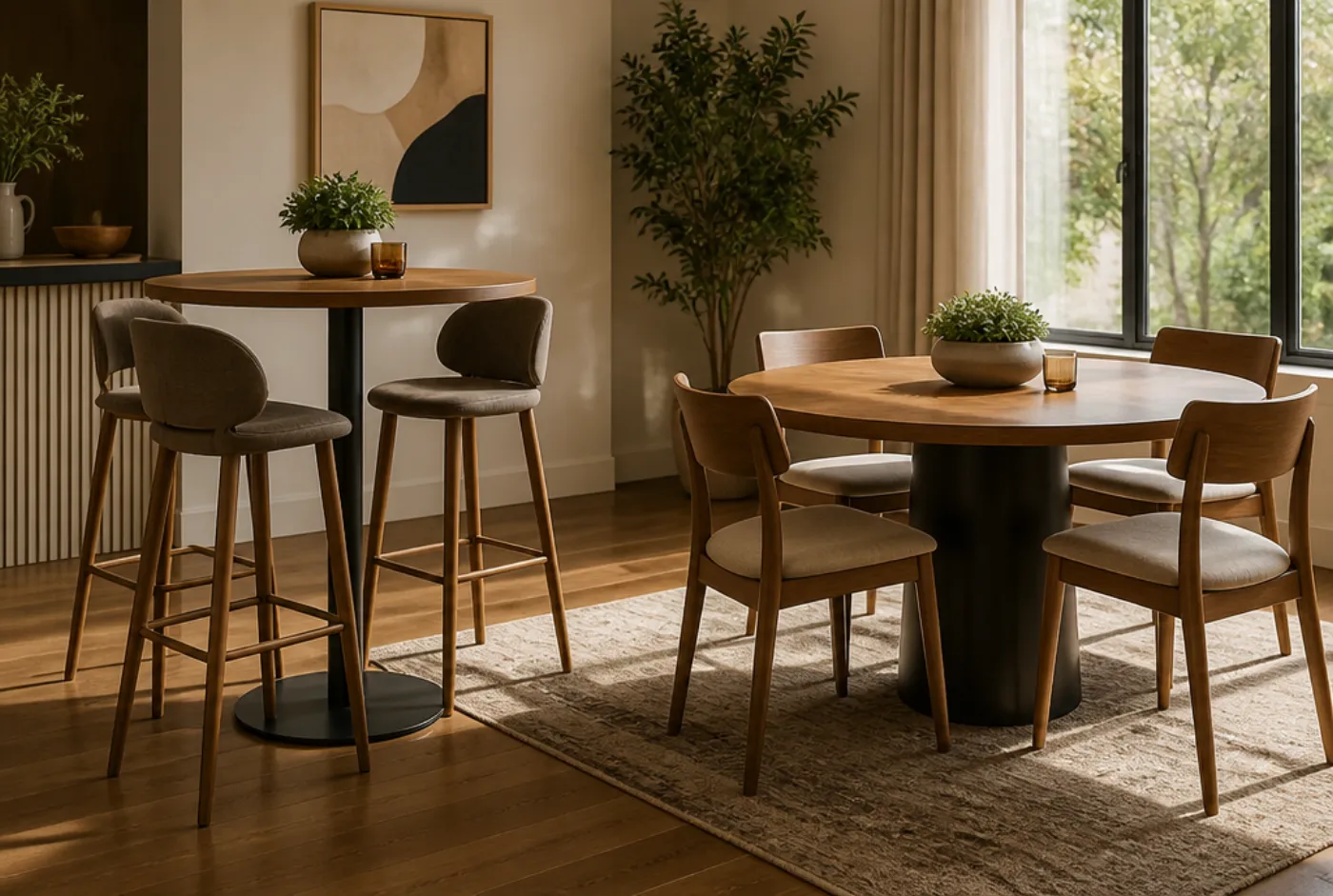
Pub tables often come as sets. A top, a base, and two to four matching stools in one carton, one SKU, one price. Convenient, and mostly a residential and light-hospitality format. The base is sized for the top it ships with, the finish is fixed, and if a stool breaks in year two you're buying a set to replace one seat.
Commercial bar-height tables are sold as components. A top, a base, and a spider or mounting plate, quoted separately. That looks like more work on a spreadsheet and is much better in practice:
- You match the base weight to the top's size and material, instead of accepting whatever shipped in the box. A heavy stone or sintered top on a set-sized base is a tipping hazard; the weight arithmetic is in our sintered stone guide.
- You replace a damaged top without replacing bases, and vice versa. Tops die far more often than bases do.
- You mix top sizes on one base program, so a room can carry 24-inch and 30-inch rounds that look like one family.
- You can change finish, edge, and material per zone.
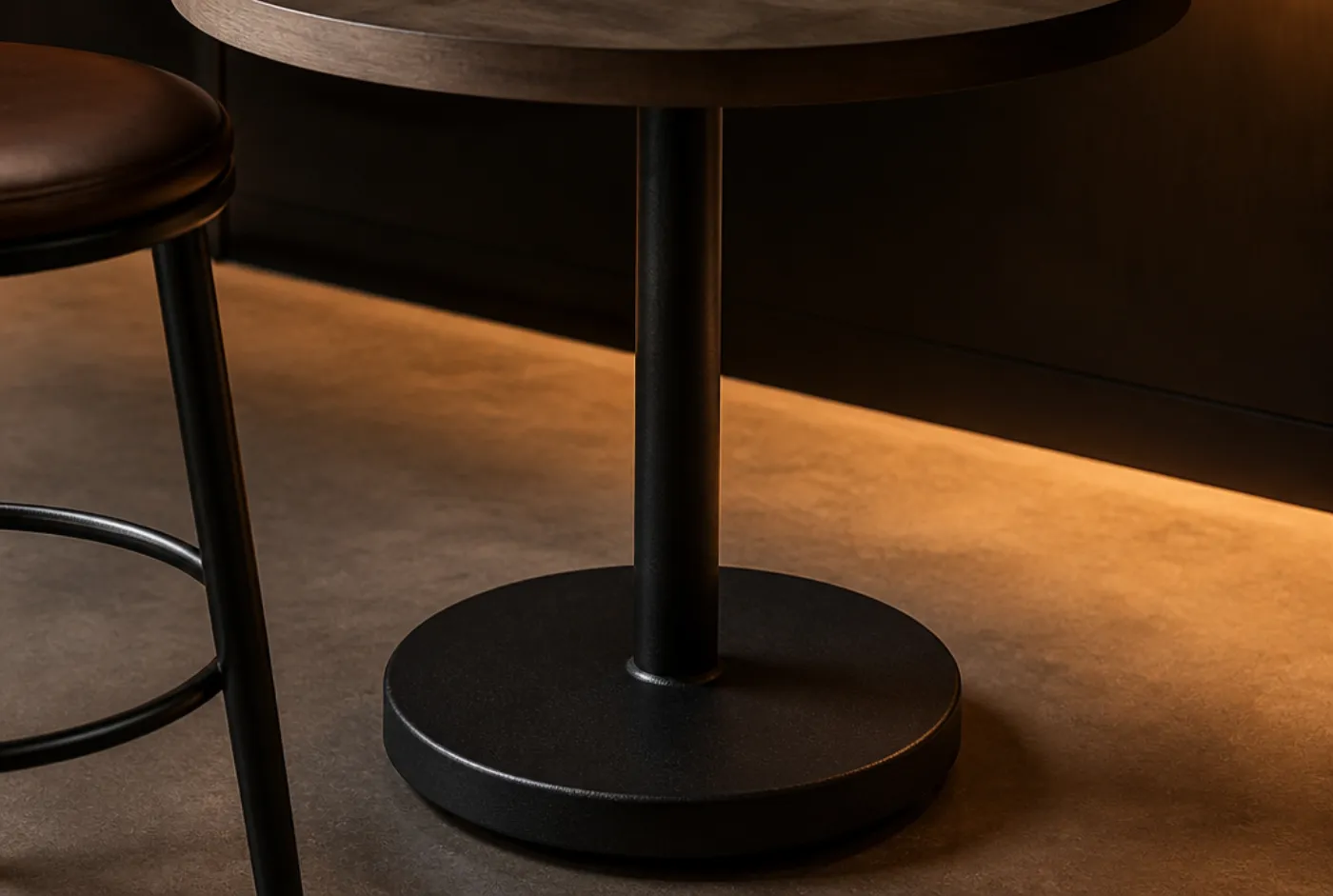
And the construction differs. Commercial bar-height bases are heavier for a reason: a 42-inch column is a longer lever arm than a 30-inch one, so the same top at bar height needs meaningfully more base weight than it does at dining height to sit stable. Residential set pieces are engineered for a family of four, not for a Friday crowd leaning on the edge. What separates the two categories in testing and warranty terms is laid out in what commercial grade actually means.
How to order so the label stops mattering
Five lines, and the name of the table becomes irrelevant:
- Finished overall height in inches, top included. Say 42, not "bar height."
- Top dimension and shape: 30-inch round, 24x24 square, 30x48 rectangle.
- Top material and edge: laminate with a T-mould, solid wood with an eased edge, sintered stone with a mitered edge. Each carries different weight and different cost.
- Base spread and base weight, stated as numbers. A base that "suits 30-inch tops" from one factory is not the same object as one from another.
- Matching stool seat height, ordered at the same time. For a 42-inch table that's 28 to 30 inches, per the 10-to-12-inch clearance rule in our bar height vs counter height guide.
Give a supplier those five lines and you'll get comparable quotes from everyone. Give them the word "pub table" and you'll get five different products at five different prices, which is how buyers end up believing one supplier is cheap when they're simply quoting something smaller.
Which one does your room want?
If you're choosing between a set and components, choose components for any room open to the public. The exception we'd accept: a small private space (a back room, a staff area, a handful of tables in a hotel game room) where the volume is low, the aesthetic is already fixed, and simplicity is worth more than serviceability.
For taprooms, sports bars, and any room where guests stand and sit in the same zone, bar height is the right choice and the reason is social: seated guests land at conversational height with standing ones. Our brewery furniture and commercial bar furniture programs are both built around that. Getting the top sizes right for your party mix is the next decision, and it's covered in high top table dimensions.
The short version
Pub table and bar table both mean 40 to 42 inches in commercial furniture. "Pub height" in residential retail can mean 36. Buy from the inch measurement, buy tops and bases as components rather than sets, and specify base weight rather than trusting a size label.
Furnishing a bar area now? Tell us the room, the ceiling height, and how many stools you want seated, and we'll come back with the top sizes, base weights, and stool heights that work together.