
Here's how you vet a restaurant furniture supplier: make them prove the "contract grade" claim, put the warranty and lead time in writing, quote landed freight, and name a project like yours they've actually delivered. A real supplier answers all four easily. A reseller with a nice website goes quiet on at least two. Quiet is your answer.
We've spent fifteen years on the supply side of this industry. That's long enough to know exactly what separates the suppliers who deliver from the ones who get fired mid-project, and a mid-project firing is a disaster with no good version. The vetting below is everything we'd want a client to ask us, so you can learn it the free way.
What does "contract grade" actually mean, and how do you check it?
"Contract grade" and "commercial grade" mean furniture built for the abuse of commercial service. The problem: the phrase costs nothing to type, and plenty of consumer-grade product wears it on marketing pages. Verification questions:
- "What testing standard does this chair meet?" The answer you want is specific: ANSI/BIFMA X5.4, the commercial seating standard (cycle testing, load testing, stability). "It's very sturdy" is not a standard.
- "What's the weight rating, and is it static or tested?" Commercial dining chairs should carry a rated capacity of at least 250 pounds with a straight answer about how it was tested.
- "What's the warranty in commercial use?" This is the sharpest question in the set, because plenty of warranties are void the moment the chair enters a restaurant. A supplier who backs commercial use with 3 to 5 years on the frame, in writing, believes their own claim. One year on a premium price, or residential-only fine print, is the tell.
- On upholstery: "What's the vinyl grade or fabric abrasion rating?" Contract fabrics clear ACT's heavy-duty threshold of 30,000 double rubs easily; contract vinyls come with cleanability and mildew specs. If the answer is a color swatch and vibes, the booths will tell you the truth in year two.
A supplier fluent in these answers sells commercial furniture for a living. A supplier who has to "check with the manufacturer" on every one is a middleman. Sometimes that's a fine middleman, but price the extra layer accordingly.
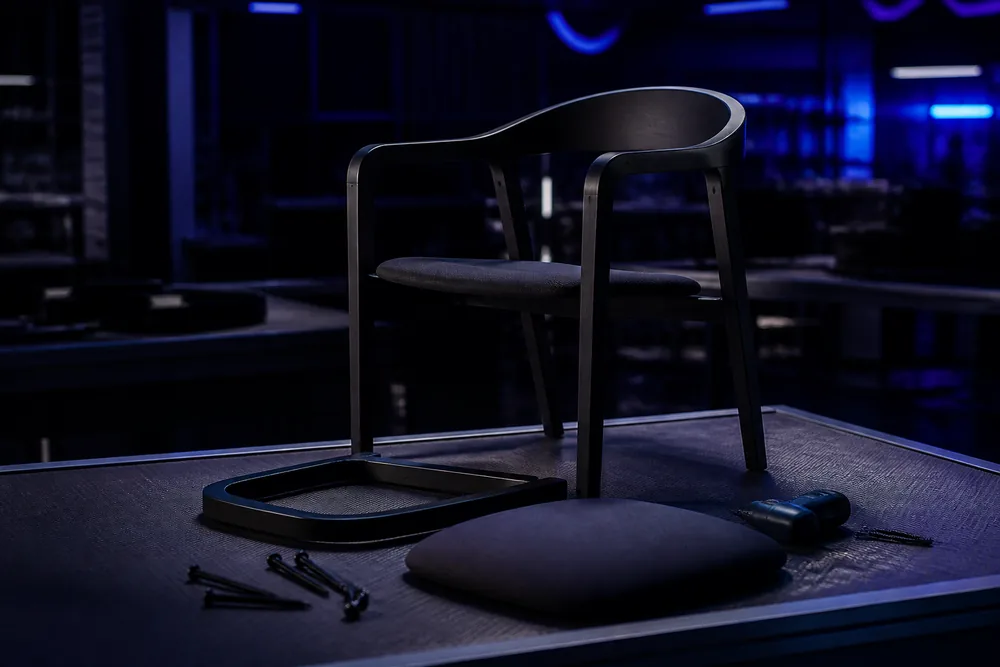
What lead-time questions actually protect you?
Every furniture disaster story we've been called into is at bottom a lead-time story. Ask:
- "Is this quantity in stock right now, and will you confirm stock at order time in writing?" "In stock" on a website means the SKU exists, not that 96 units in your finish do. The written confirmation is the whole point.
- "What's the lead time if it's NOT in stock?" Stocked goods ship in 2–4 weeks; factory orders and custom finishes run 8–14 weeks or more. You want both numbers before you fall in love with a finish.
- "What happens if you miss the date?" You're not expecting compensation. You're listening for whether they've thought about it. Suppliers who communicate delays early are worth a price premium; the ones who go dark cost you your opening date.
- Booths and custom pieces get their own timeline conversation. They're the longest-lead furniture in a dining room, and the shop-drawing approval process adds weeks that nobody puts in the brochure. (Get the drawing right the first time. Our booth dimensions guide is the checklist.)
Then build two weeks of cushion between the promised date and the day you actually need furniture. Training week in an empty dining room is a bad look.
How should freight and delivery be quoted?
Insist on landed cost (the number at your door) for every comparison. Freight on dining furniture typically runs a real percentage of the order (in our experience, 8 to 15 percent), and it varies enough between suppliers to flip which quote is genuinely cheaper. Details that belong in the quote:
- Dock or no dock at your address: no dock means a liftgate fee, and unmentioned liftgate fees appear as delivery-day surprises
- Inside delivery vs curbside, because 96 chairs on a curb is a memorable afternoon
- Freight damage terms: who files claims, and the reporting window. Count cartons and note damage on the delivery receipt before signing; that notation is what keeps a claim alive
- Assembly: what arrives assembled vs knocked-down, because forty flat-packed chairs is a labor line someone has to own

When does buying import-direct make sense?
The factories that make most commercial furniture will sell to you directly at container scale, and the unit prices are genuinely lower. Our honest take on when it's worth it:
- It makes sense when you're ordering at container quantities (think multi-location groups or a very large single project), your schedule tolerates 10–16 weeks door to door, and someone on your side can manage QC: sample approval, pre-shipment inspection, and the paperwork of importing.
- It doesn't make sense when you need 60 chairs for one dining room, you have no recourse plan for a bad container, or "someone on your side" for QC is nobody. A container of chairs with soft welds has no return counter. The domestic supplier's margin is partly an insurance premium. For single-location orders it's usually insurance worth buying.
The middle path most operators actually want is a supplier or sourcing partner who buys at import scale and carries the QC risk for you. You give up the rock-bottom unit price and keep your opening date.
Red flags we never argue with
After enough projects, some signals end conversations for us on the spot:
- No physical address or verifiable history: resellers dropship dining chairs too, and you'll find out during a warranty claim
- Refusing to sell a sample before a volume order (a sample is fifty dollars of insurance on a five-figure order; a real supplier credits it back)
- "Everything's in stock" across an entire catalog, always. Inventory doesn't work that way
- Pressure pricing: "this price expires Friday" on commercial furniture is a sales tactic, not a market condition
- Vague answers about who actually manufactures the product. You're not owed trade secrets, but "we can't say anything" usually means "we don't know either"
How many suppliers should you actually quote?
Three. Two feels like diligence and isn't: you can't spot the outlier. Five is a part-time job that delays your order for marginal information. Three quotes, all specified identically (same chair grade, same quantities, same delivery address, landed pricing required), tells you the market price and exposes whoever's hiding costs in freight. And when one quote comes in dramatically below the other two, treat it as a question rather than a victory: cheapest-by-a-mile usually means a spec substitution you haven't spotted yet, a stock situation they haven't mentioned, or a freight surprise scheduled for later.
The reference question nobody asks
End every vetting call with: "Tell me about a project like mine you delivered in the last year, and can I contact them?" Restaurant seating for a 90-seat full-service room is a specific competence; a supplier whose references are all office cubicles is learning on your project. One five-minute call with a past client tells you more than every certification on the website.
The same logic runs through the whole order, by the way: quantity breaks, sample discipline, warranty asks. We wrote the volume-order version of this playbook for bulk chair buying, and the budget context (what each tier of chair and booth should cost from a fair supplier) is in our restaurant furniture cost guide.
Or skip the vetting and borrow ours
Fifteen years on the supply side means we've already run this checklist on ourselves, and on the factories and fabricators behind every piece we supply. We kept the ones who deliver and dropped the ones who don't. That vetted production network is a real part of what you get when we supply your restaurant furniture. Send us your list (the floor plan, the seat count, the opening date), and we'll answer every question on this page in writing, with landed pricing you can compare honestly.