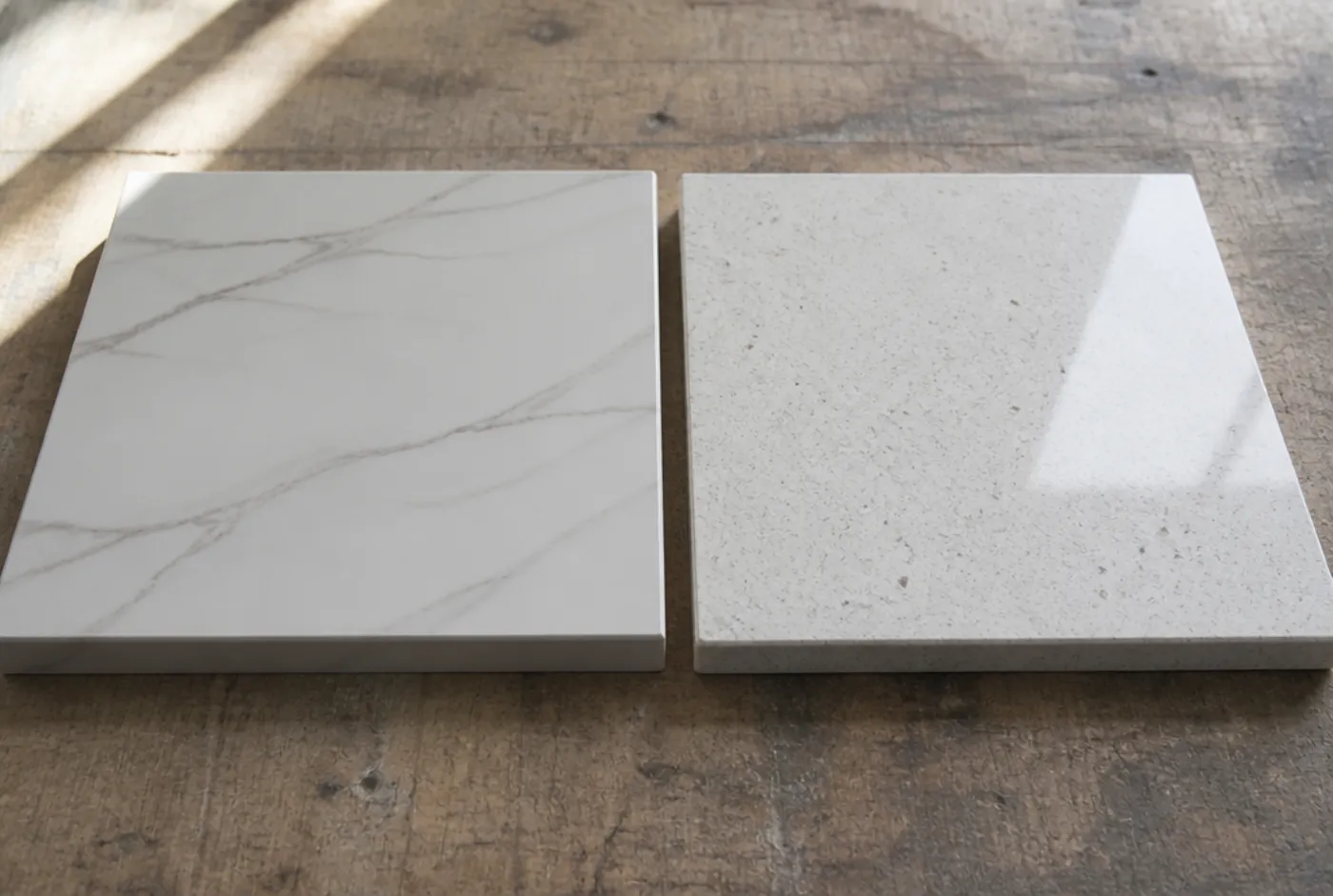
For a commercial table top that takes hot plates, direct sun, or hospital-strength cleaning chemicals, sintered stone wins, and it isn't close. Engineered quartz is roughly 90 to 93 percent ground quartz bound with 7 to 10 percent polyester resin; sintered stone is fired mineral with no resin in it at all. Every meaningful difference between the two traces back to that resin. Heat degrades it, UV yellows it, solvents attack it. Where quartz still wins is indoors, out of the sun, on interior counters and vanity decks, where it's often cheaper, easier to fabricate, and perfectly adequate.
We quote both. When an operator asks which to put in a dining room, our answer depends on exactly three questions, and we'll get to them. First, the material facts. The product side lives on our sintered stone table tops page, and the fuller primer on how the slabs are made is in what sintered stone is.
Head to head on the specs that matter
Heat. Quartz resin begins to discolour and scorch somewhere around 300°F, and a hot pan can leave a permanent white or amber halo. Sintered stone was manufactured at over 1,000°C; a skillet is a non-event. In a kitchen pass, a pizza counter, or any room where sizzle platters land on tables, this alone decides it.
UV. Most quartz manufacturers explicitly exclude outdoor use from warranty because polyester resin yellows and chalks under sunlight. Sintered stone has no organic component to break down and is routinely warranted for exterior installation. For a patio program this is not a preference, it's a disqualification.
Porosity. Both are effectively non-porous: quartz because resin fills the voids, sintered stone because it's vitrified. Practical difference: near zero for staining. Both beat granite and marble comfortably.
Chemicals. Resin is vulnerable to solvents, strong alkalis, oven cleaner, and paint thinner. Sintered stone is not. If your closing checklist includes anything aggressive, or if your staff will improvise with whatever's under the sink at 1am (they will), that gap matters more than it looks on paper.
Hardness and scratching. Sintered stone typically tests around Mohs 6–7; quartz is comparable near 7 on the mineral itself, but the resin matrix between grains is softer and takes the scratch first. Neither is knife-proof, and both will eventually show cutlery marks in a polished finish. Matte hides them on both.
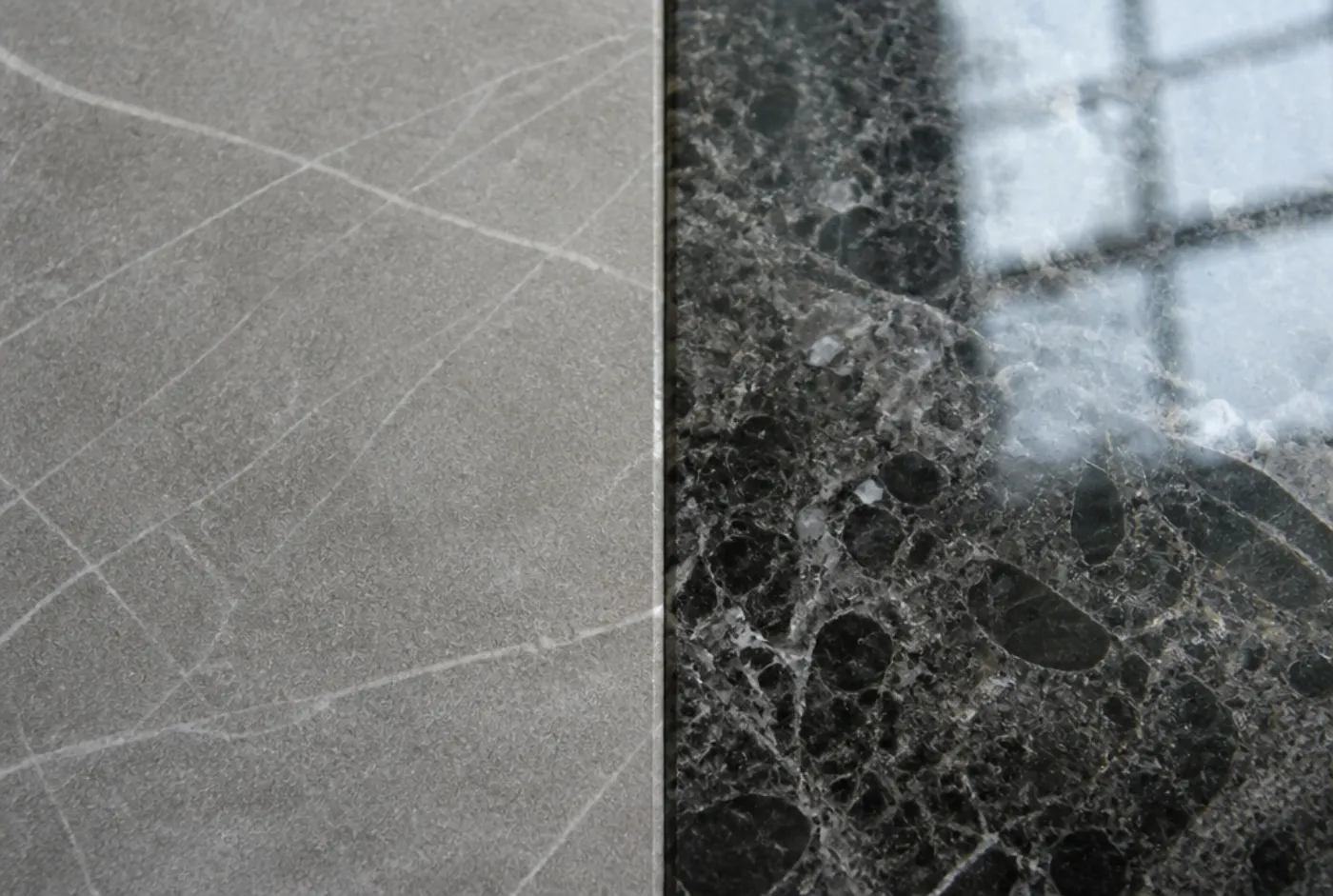
Impact. Here quartz has the honest advantage. The resin gives it a small amount of give, so it tolerates a dropped plate at a corner slightly better than a brittle fired slab. Sintered stone chips at edges and corners, and a chip is not repairable.
Weight. Similar per unit thickness: call it 6 lb/sq ft at 12mm and 10 lb/sq ft at 20mm for either. Quartz is more commonly stocked in 20mm and 30mm, which is why quartz tops often feel heavier: they usually are, because they're thicker.
Cost. Broad strokes, sintered stone runs somewhere between comparable and moderately dearer than quartz on the slab, and the gap widens on fabrication because sintered stone needs slower cutting, better tooling, and a fabricator who has actually done it. If a quote for sintered stone comes back suspiciously close to laminate pricing, ask what's actually being supplied.
The three questions we ask before recommending either
Is it going outside, or within reach of direct sun through glass? If yes, sintered stone. Full stop. A sunny window bank inside a restaurant has ended more quartz tops than actual patios have.
Does hot cookware touch the surface? If yes, sintered stone. Trivet discipline holds for about six weeks in a busy room.
Is this a horizontal surface people put chairs at, or a counter? Table tops take corner impacts from bus tubs, chair backs, and cleaning carts; counters mostly don't. On enclosed counters and vanity decks with protected edges, quartz's slight impact advantage and easier fabrication are real, and its lower fabrication cost is real money at volume.
Answer all three toward the quartz side and quartz is the right call. Any single answer landing on sintered and we'd spec sintered.
A fabrication note nobody puts in the brochure
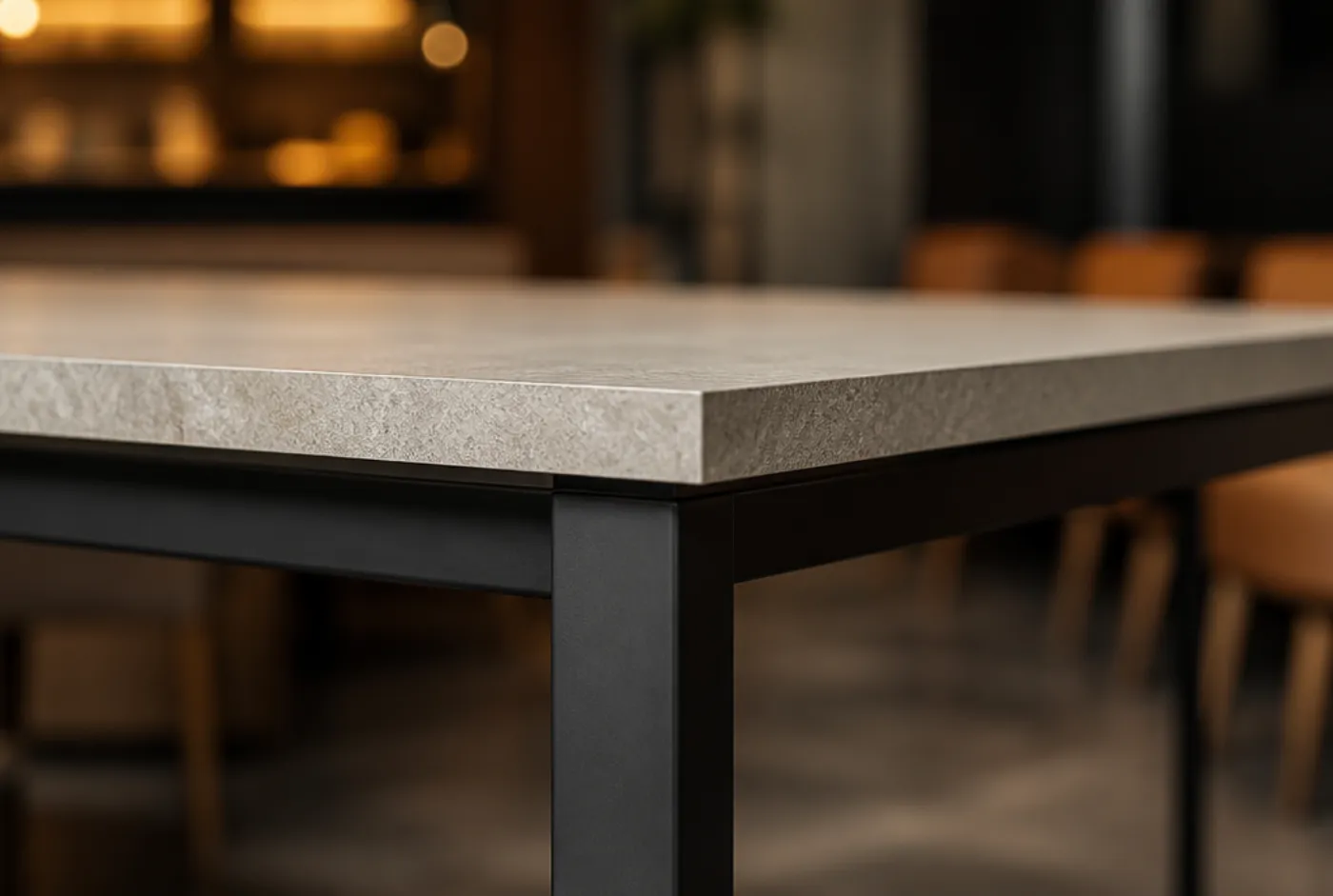
Cutting engineered quartz generates respirable crystalline silica, and the fabrication trade has taken this seriously in the last several years: OSHA enforces a respirable silica standard in US shops, and Australia went as far as banning engineered-stone benchtops outright in 2024 over silicosis in fabricators. This is a workplace-safety issue in the fab shop, not a hazard to a finished installed top in your dining room, and sintered stone is not silica-free either. But it does affect your supply chain: fabricators equipped for wet-cutting and extraction cost more and quote longer, and shops that aren't may simply stop offering the work. Build it into your lead time expectations, especially for custom sizes.
What we'd actually spec, by room
- Restaurant patios, rooftops, pool decks: sintered stone, 12mm, matte, on a weighted base. Nothing resin-bound belongs out there.
- High-volume casual dining indoors: sintered stone if the budget carries it, with eased corners and two or three spare tops ordered up front. It outlives two laminate cycles.
- Bar tops and drink rails: sintered stone. Constant liquid, citrus acid, sanitizer, and the occasional hot dish. See our commercial bar furniture range for the seating that goes under it.
- Hotel guest-room vanities and interior counters: quartz is genuinely fine, and generally the value pick. Protected edges, no sun, no cookware.
- Anything you plan to replace in three years anyway: neither. Buy a good laminate and spend the difference on chairs, which is where guests actually form opinions.
The short version
No resin means no heat limit, no UV limit, and no chemical vulnerability. That's sintered stone's entire case, and it's a strong one for tables. Quartz's case is cost, fabrication ease, and slightly better impact behaviour, which is enough to win indoors on protected counters and nowhere near enough to win outdoors.
Pricing both for a specific room? Send us the sizes, the quantities, and where the sun hits. We'll quote the two materials against each other with the base upgrades included, and tell you plainly when the cheaper one is the right answer.