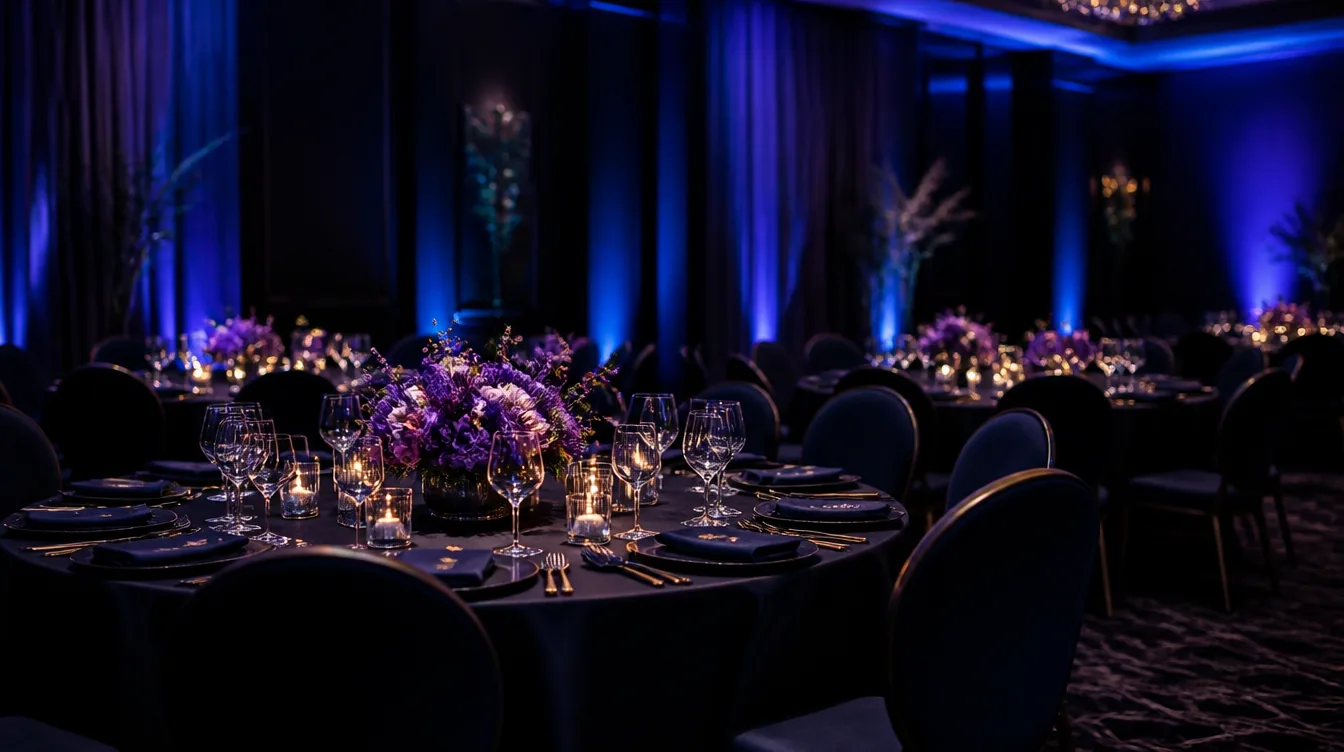
For a working budget: commercial stacking banquet chairs run $25 to $90 each at wholesale depending on frame and fabric, 60-inch round tables run $60 to $160, and a complete 200-guest hall — chairs, tables, carts, cocktails — typically lands somewhere in the $15,000 to $30,000 range before you get into specialty seating or staging.
Those are working market ranges, not catalog list prices. Let's break down where within each range you'll land, and why — because the spread isn't random, and knowing what moves the number is how you spend where it counts.
How much do banquet chairs cost?
Chairs are usually the biggest line on a banquet furniture budget, so this is where precision pays:
- Basic steel-frame stacking chairs with fabric or vinyl seats: $25–$50. Fine for lighter duty, budget-driven fit-outs, and rooms that flip occasionally rather than daily. At the bottom of this range, look hard at the welds and the warranty — this is where the five-year concept chair lives, and it's an honest buy as long as you know that's what it is.
- Aluminum-frame banquet chairs: $45–$90. Lighter to move (8–10 pounds versus 10–14 for steel), which matters enormously if your crew flips rooms daily. The premium buys labor savings and longer service life, not looks.
- Premium and custom-upholstered banquet chairs: $90–$150 and up. Heavier foam, upgraded fabrics, custom finishes. Hotels buy here for brand standards; independent halls usually don't need to.
- Chiavari chairs: roughly $35–$70 depending on resin versus wood — a different animal with its own economics, which we've covered separately in our chiavari chair cost guide.
Whatever the chair, add 5 to 10 percent spares to the order. Finishes get discontinued, and matching chairs three years later is somewhere between expensive and impossible.
How much do banquet tables cost?
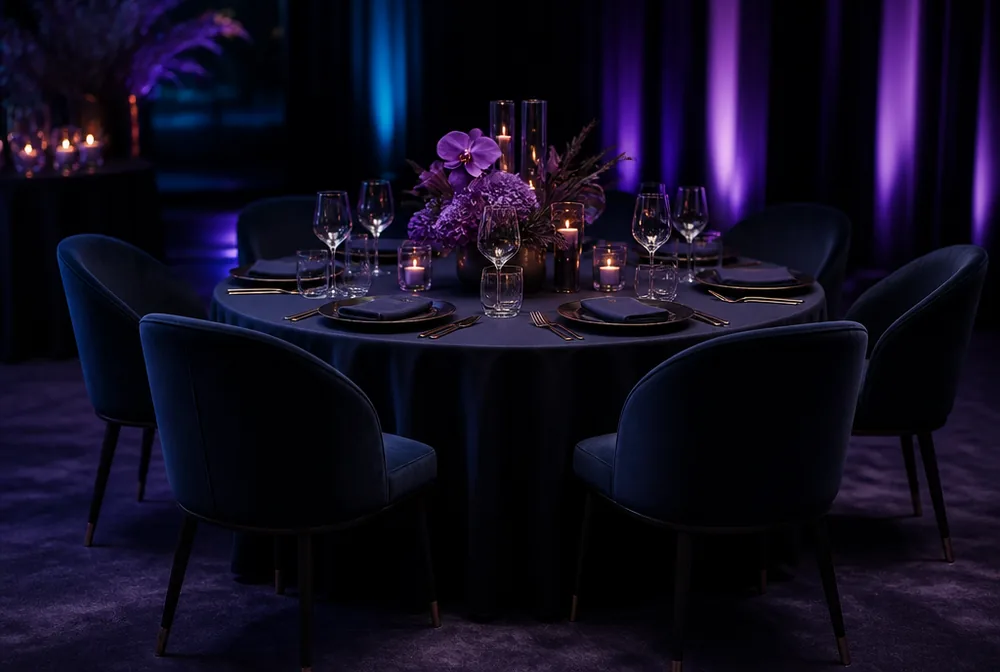
- 60-inch rounds: plastic folding $60–$100; plywood with a banquet-cloth-ready top $90–$160. Plywood takes staples, heat, and decades of abuse; plastic is lighter and cheaper. Both are defensible — pick based on your caterers and your crew.
- 72-inch rounds: add roughly 20 to 30 percent over the 60-inch price.
- 8-foot rectangles (30 x 96): plastic folding $50–$90; plywood $100–$160.
- Cocktail tables (30–36 inch top, 42-inch height): $60–$130.
- Table trucks and chair dollies: $150–$400 each — and they are not optional. Fleets without carts destroy themselves; we've written about why in our storage guide.
A worked budget: the 200-guest hall
Here's how we'd rough out a mid-grade fit-out for a hall seating 200 at 60-inch rounds. Middle-of-range pricing, nothing fancy:
- 220 stacking chairs (200 capacity plus 10 percent spares) at $45 — $9,900
- 25 60-inch rounds at $110 — $2,750
- 8 8-foot rectangles at $110 — $880
- 10 cocktail tables at $90 — $900
- Chair dollies and table trucks — $2,500–$3,500
- Subtotal: roughly $17,000–$18,000
Go budget on everything and the same room lands closer to $12,000–$13,000. Go aluminum chairs and premium tables and you're at $25,000–$30,000. All three versions seat the same 200 people on opening night; they differ in how they look in year two and how your crew's backs feel in year five.
Not sure your room actually seats 200? Work the dimensions through our 200-guest table math guide before you budget a single chair — capacity math is free, and over-ordering isn't.
Is used banquet furniture worth it?
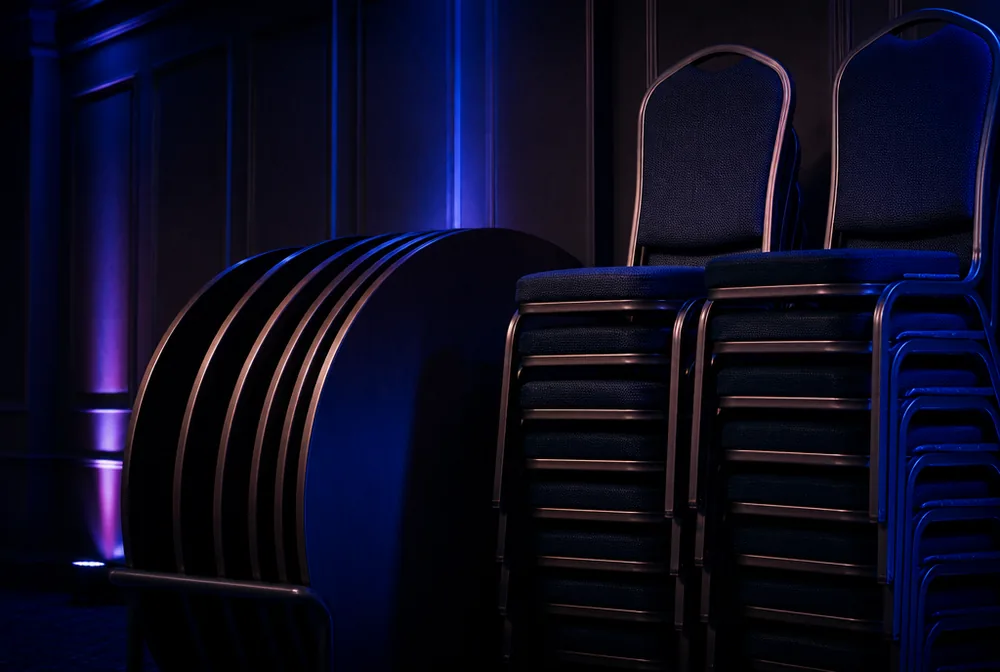
Sometimes — selectively. Plywood tables are the best used buy in this industry: they're nearly indestructible, hotel liquidations sell them regularly, and under a tablecloth nobody can tell a ten-year-old table from a new one. Carts and dollies buy well used too. Chairs are where we pump the brakes: a used fleet's frames have unknown miles on them, the finish won't match anything you buy later, and reupholstering a bargain fleet usually costs more than the bargain saved. If you do buy used chairs, inspect stack by stack, and price in a ten percent cull rate for the ones that arrive worse than described.
Can you phase the purchase?
Yes, and for a hall ramping up its bookings we often recommend it — with one iron rule: phase by category, not within a category. Buy all the chairs at once, all the rounds at once. Splitting a chair order across a year invites the discontinued-finish problem, where phase two arrives in a fabric that almost matches phase one, forever. The safe sequence: full chair fleet and rounds first (they're the capacity), rectangles and cocktails next, specialty pieces — staging, second-fleet chiavaris, extra pipe and drape — as bookings justify them. Rent the gaps in the meantime; rental invoices are annoying, but they're cheaper than owning the wrong thing.
What about freight? (The line nobody quotes you upfront)
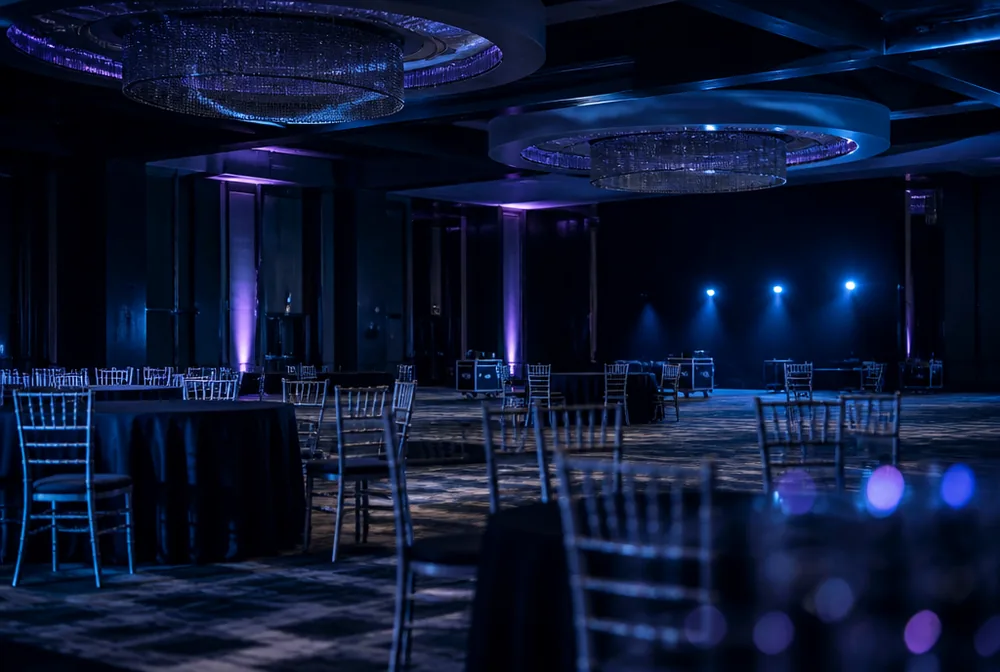
Banquet furniture is bulky freight, and it moves the total more than most price-shopping does. On typical orders we see freight land between 8 and 15 percent of the furniture subtotal, depending on distance, whether the order fills pallets efficiently, and whether the destination has a loading dock. A hall without a dock pays extra for liftgate delivery; a rush order pays extra for everything.
This is why we nag every client to compare landed cost — the number at your door — instead of unit prices. A $42 chair with $9 of freight loses to a $46 chair with $3 of freight, and you can't see that until you make suppliers quote delivered. Quantity breaks work the same way: the price-per-chair cliff at 100 or 300 units can pay for the spares by itself. The whole game of volume pricing, pallet math, and freight terms is its own topic — we've laid it out in buying banquet chairs in bulk.
How long should this furniture last?
Because the budget only makes sense against a lifespan. A mid-grade commercial banquet chair doing steady event duty should give you seven to ten years before reupholstery or replacement becomes a conversation; plywood tables under cloths routinely outlast the mortgage; carts are effectively permanent. That's the quiet math behind buying commercial grade in the first place — a $45 chair over eight years of weekly events costs pennies per guest seated, while the $22 lookalike that fails in year two costs double after you re-buy it, plus a weekend of scrambling. When a supplier's price seems too good, divide by the honest lifespan instead of comparing stickers; the ranking usually flips.
Where to spend and where to save
After a lot of these budgets, our honest hierarchy:
- Spend on chairs. Guests touch nothing else for four hours. Frame quality and foam density are where cheap shows first.
- Spend on carts. They protect everything else you bought.
- Save on tables. Every table wears a cloth at every event. A mid-grade round under linen is indistinguishable from a premium one.
- Save on quantity of specialty pieces. Buy the core fleet; rent the serpentine tables and the eighth pipe-and-drape bay until bookings prove you need to own them.
- Never save by skipping spares. See above. This is the cheapest insurance in the industry.
And if you're outfitting the whole building — staging, linens, service gear, AV — the furniture is only part of the list. Our banquet hall equipment checklist covers every category with quantities, so nothing shows up as a surprise rental invoice later.
Getting real numbers for your room
Ranges get you a budget; a quote gets you a decision. When we price a hall, we spec the chair to the actual duty cycle, run the capacity math on the real floor plan, and quote everything landed — then the comparison is honest.
If that sounds like the part of the project you'd happily hand off, the seating side is literally what we do. We supply banquet seating to halls, hotels, and venues at every budget level, and we don't supply banquet tables — the freight on them rarely works out in your favor from us. Send us your guest count and your room dimensions — we'll tell you what it really costs, freight and spares included.