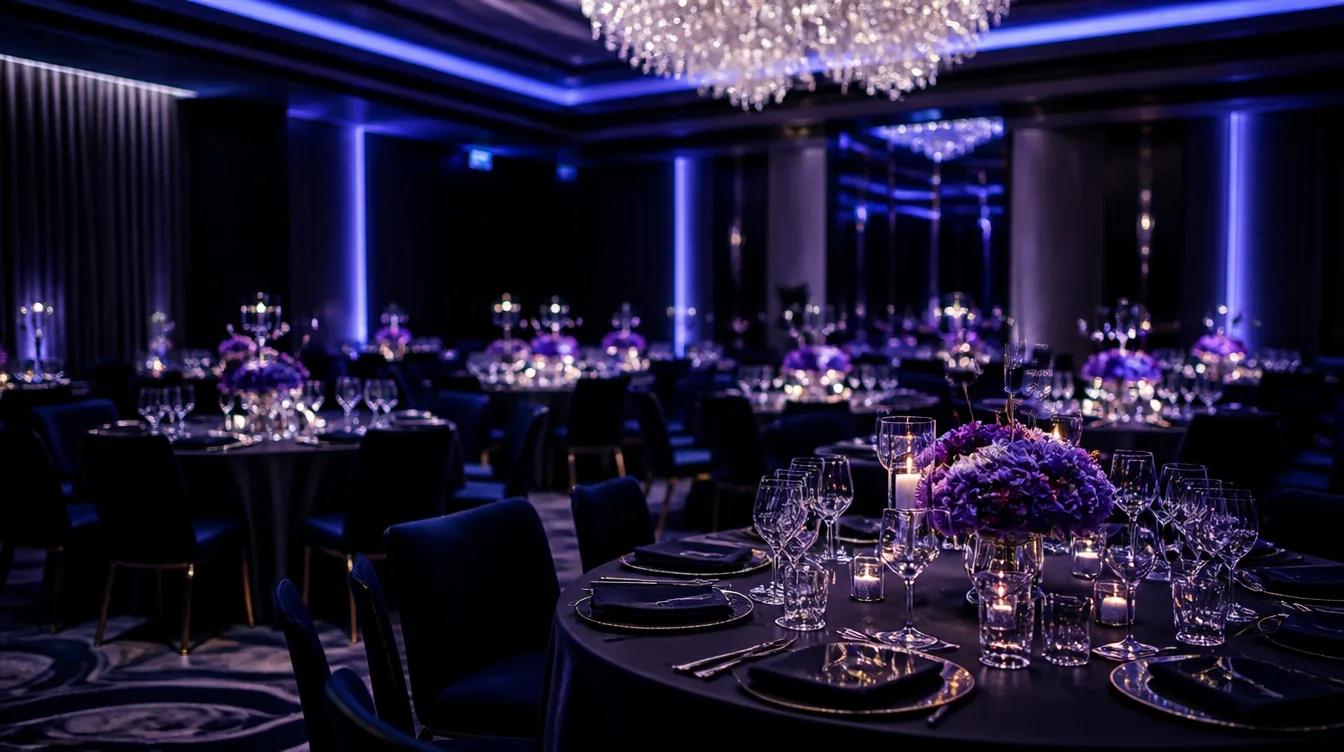
A banquet hall needs equipment in seven categories: seating, tables, staging and dance floor, linens and tabletop, service equipment, transport and storage gear, and AV. Miss a category and you'll be renting it back at retail on your busiest weekend — we've watched venues pay more in a year of dance-floor rentals than the floor would have cost outright.
We've built this list from real openings we've furnished, so it's organized the way we actually quote it: what you need, roughly how many per hundred guests, and which corners are safe to cut in year one.
Seating: the fleet that defines your capacity
Chairs are the first line on every banquet hall budget and the item guests physically live in for four hours.
- Stacking banquet chairs — your workhorse. Buy your rated capacity plus 5 to 10 percent spares; finishes get discontinued, and the spares you buy on day one are the only guaranteed match. For a 200-guest room, that's 210–220 chairs.
- Chiavari or specialty chairs (optional) — some halls run a second, prettier fleet they upsell for weddings. It's a real revenue line, but it doubles your storage problem. We've broken down the economics in our chiavari chair cost guide.
- A few bar-height stools if you'll run cocktail areas.
Before you settle on quantity, check the spec details that bite later — width, stacking height, weight rating. Our banquet chair dimensions guide covers exactly what to verify, and our 200-guest table math guide turns your room dimensions into honest capacity numbers by layout style.
Tables: rounds do the work, rectangles do the service
For a hall hosting 200 at rounds, our baseline order looks like this:
- 60-inch rounds — the standard wedding table, seating 8 comfortably. For 200 guests at 8 per table: 25 rounds. (If you'll pack 10 to a table, 20 — but plan on 25 and thank yourself.)
- 8-foot banquet rectangles (30 x 96) — 6 to 10 for head tables, buffets, gift and registration tables. These get used at every single event; don't shortchange them.
- 6-foot rectangles — 4 to 6 for DJ, cake, and tight corners where an 8-footer won't turn.
- 30- or 36-inch cocktail tables (42-inch height) — 8 to 12 for receptions and cocktail hours.
- 48-inch rounds — a handful if you host smaller dinners or sweetheart-table weddings.
If you're wondering how these counts shift for different guest counts, we wrote the full math out — table style by table style — in how many tables for 200 guests.
Staging, dance floor, and the room-changers
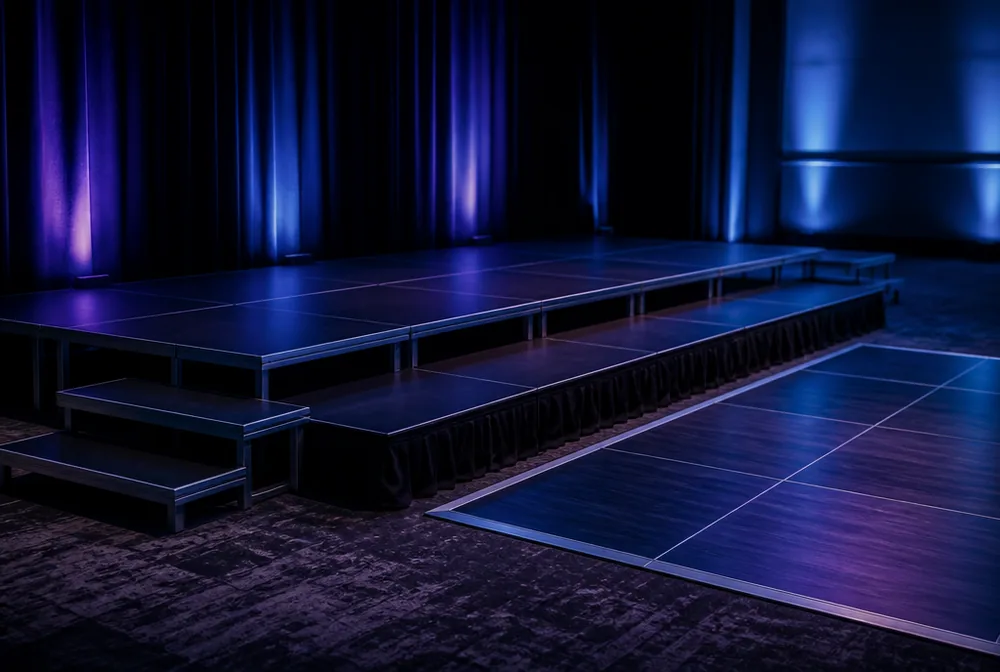
- Portable staging or risers — enough for a head table or a band, typically 12 x 16 feet to start, in sections your crew can carry.
- Dance floor — budget around 4 to 5 square feet per guest for the share of guests who'll dance at once; for a 200-guest wedding that's roughly an 18 x 18 floor. Modular snap-together sections store flat and pay for themselves quickly against rental prices.
- Pipe and drape — a few bays hide a service corridor or split a room, and clients ask for it constantly.
- Portable bars — one folding bar per 75–100 guests is our working ratio.
- Room dividers if your hall books simultaneous smaller events.
Linens and tabletop
You can rent all of this at first, and many halls should. But if you're buying:
- Tablecloths — 2 to 2.5 per table (one on, one in the wash, allowance for stains that never come out). For 25 rounds, that's 50–60 cloths, plus rectangles and cocktails.
- Napkins — 1.5 per seat minimum.
- China, flatware, glassware — if you run in-house catering, buy 1.25 to 1.5 place settings per seat; breakage and mid-event resets are real. If outside caterers bring their own, skip this entirely in year one.
- Chargers, votives, table numbers — cheap, endlessly reused, always missing. Buy extras.
Service and catering equipment
Even halls that don't cook need staging equipment for the caterers who do:
- Chafing dishes — one per 40–50 guests for buffet service, plus fuel
- Beverage dispensers and coffee urns — one large urn per 100 guests
- Serving trays, tray jacks, bus tubs — a dozen of each to start
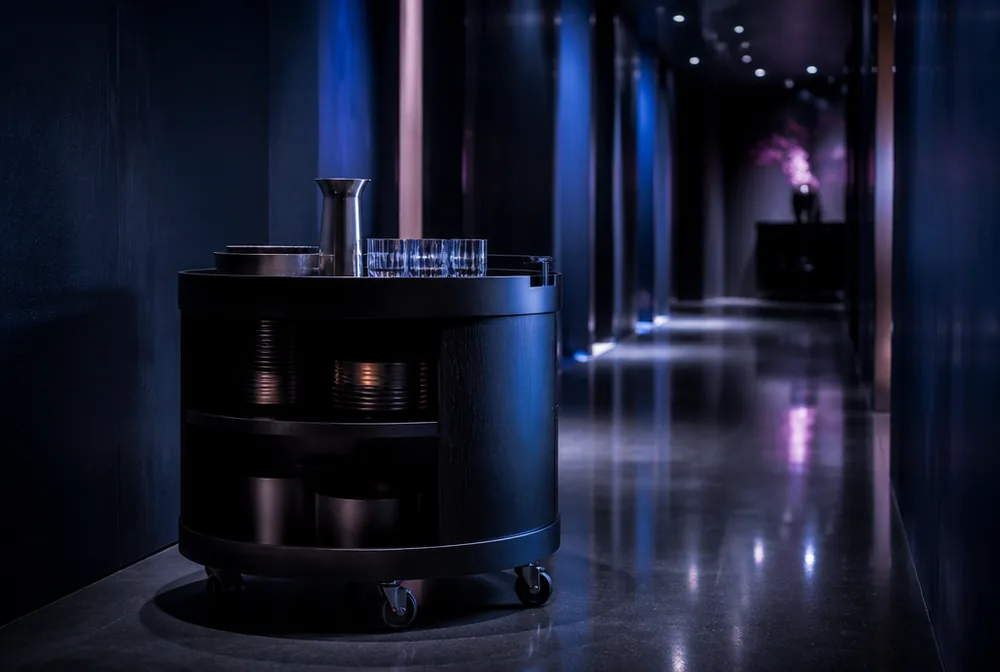
- Rolling banquet carts for plated service
- Trash and recycling barrels — more than you think; one per 50 guests plus service areas
- A commercial vacuum, mop setup, and a real cleaning cart — the least glamorous line on this list and the one used most often
Transport and storage gear (the category everyone forgets)
Every chair and table on this list gets moved hundreds of times a year. The moving equipment is not optional:
- Chair dollies — one per 8–10 stacking chairs if you flip rooms fast; at minimum, one per 20 chairs
- Round-table trucks — vertical dollies holding 6–10 rounds each
- Rectangle table carts for the 8-footers
- Hand trucks and a flat cart for everything else
Skipping carts to save a few thousand dollars is the most expensive cheap decision in this business — it slows every changeover and it's how chairs get dragged, dropped, and destroyed. While you're at it, confirm the storage room actually fits the fleet; our banquet chair storage guide has the square-footage math.
AV and electrical
- PA system with wireless microphones — two handhelds minimum; every event has speeches
- Basic uplighting — transforms a plain room and rents at a premium
- Projector and screen or a large display for slideshows
- Extension cords, power strips, gaff tape, cord covers — buy once, guard jealously
Should any of this be bought used?
Some of it, absolutely — and knowing which lines is where a used-market bargain stays a bargain:
- Good used buys: plywood banquet tables (they're nearly indestructible; check the folding legs and edges), table trucks and dollies, pipe-and-drape hardware, coffee urns, and staging from a reputable seller. Hotel liquidations are the classic source.
- Buy new: chairs, honestly. A used fleet's remaining lifespan is a mystery, finishes won't match anything you add later, and chairs are the item guests inspect at close range for four hours. The exception is a young, single-owner fleet you can inspect stack by stack — those exist, but they're rare enough that we don't plan around finding one.
- Always inspect in person or by detailed video before wiring money, count everything on pickup day, and assume ten percent of any used lot is worse than described. Price accordingly and you'll rarely be disappointed.
What does all of this cost?
The honest answer is "it depends on the chair you choose more than anything else," because seating is usually the biggest single line. We've laid out real per-chair, per-table, and whole-room ranges — including freight, which surprises everyone — in our banquet furniture cost guide. And if you're buying the seating fleet at real volume, read our notes on bulk banquet chair orders before you sign anything, because quantity breaks and freight terms move the total more than the sticker price does.
Where we'd start if the budget is tight
Year one, in order: chairs, rounds, rectangles, carts, and a PA. Rent the dance floor, linens, and place settings until bookings prove the demand, then buy the rentals you keep paying for most often. That sequence has never steered a client wrong.
And if you'd rather not price seven categories yourself — the seating half of that list is the job we do. We supply banquet seating and the carts that move it to halls and venues at every stage (tables we leave to your local supplier, and we'll say so plainly). Send us your room size and your event calendar, and we'll send back a list with real landed costs, including the unglamorous stuff.