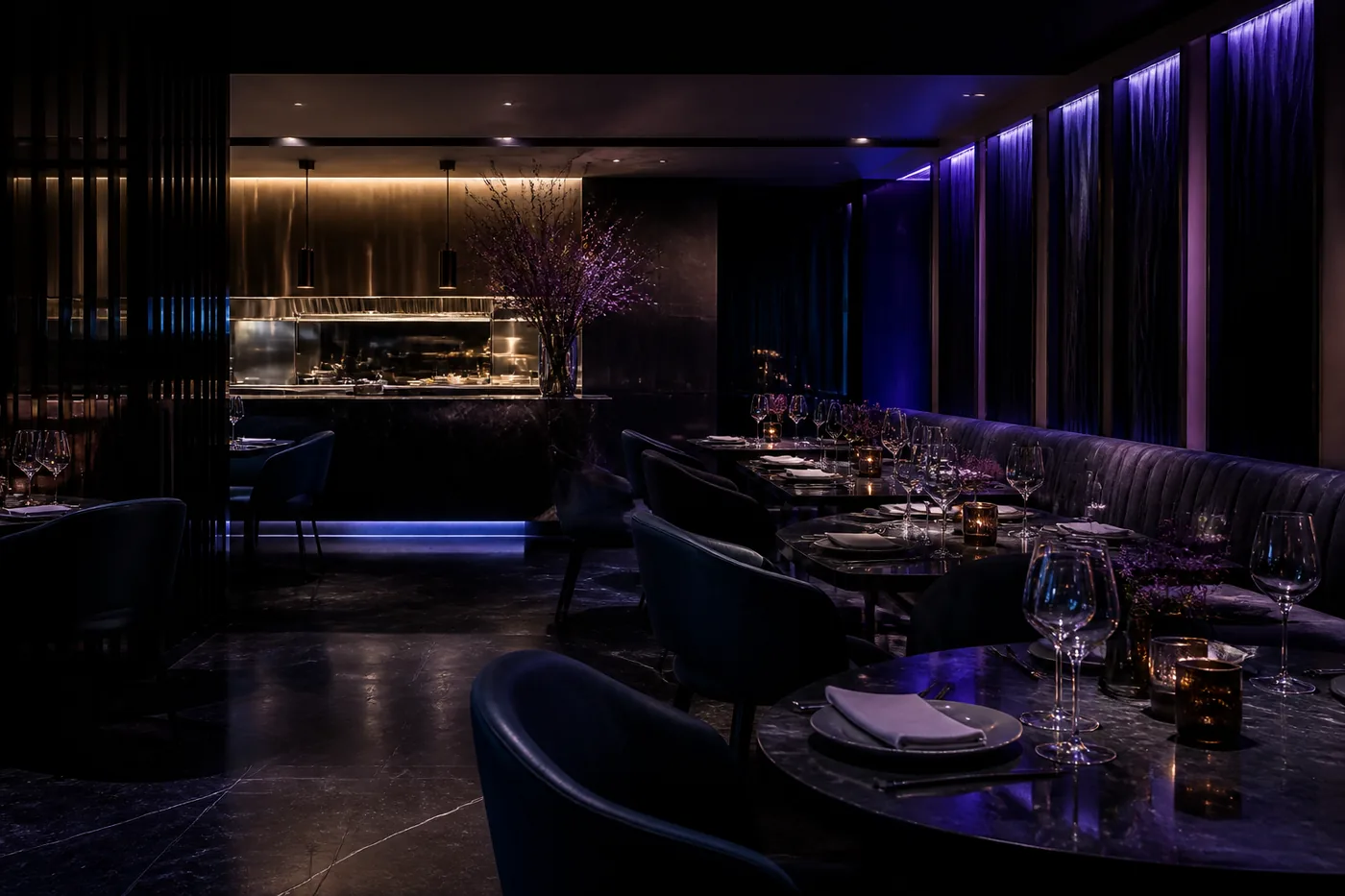
FF&E stands for furniture, fixtures, and equipment — everything movable (or semi-movable) that makes a restaurant operate, as distinct from the building itself. In a restaurant that means the dining chairs and tables, the booths, the bar stools, the kitchen line, refrigeration, smallwares, POS hardware, and a long tail of items that show up on nobody's dream board and everybody's opening budget.
We've spent fifteen years supplying FF&E for restaurant openings and hotel food-and-beverage projects, which means we've typed most of this list into purchase orders more times than we can count. Here it is, organized the way lenders, designers, and contractors actually talk about it.
What counts as FF&E in a restaurant?
The working definition: if you could pick it up and take it to your next location — or unbolt it without demolishing anything — it's FF&E. The walk-in cooler box built into the structure is construction; the reach-in fridge rolled in on casters is FF&E. The tile floor is construction; the host stand sitting on it is FF&E.
The distinction isn't academic. Your lender finances FF&E differently than construction, your accountant depreciates it on a different schedule, and your lease usually says which one you own when you leave. Getting the categories right on day one saves genuinely painful conversations later.
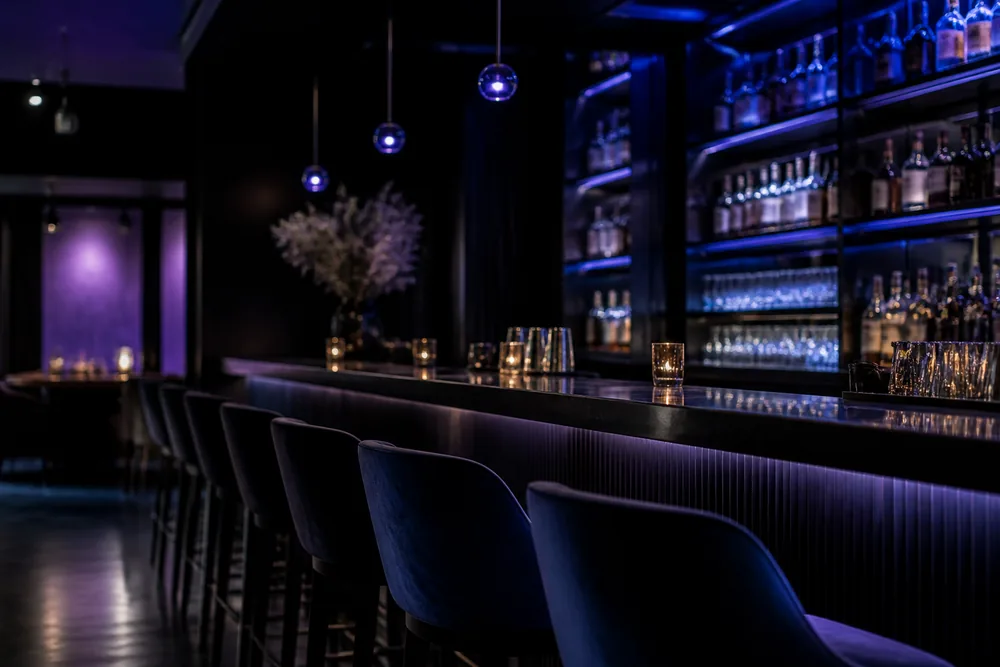
The front-of-house FF&E list
This is our side of the industry, so we'll go deepest here:
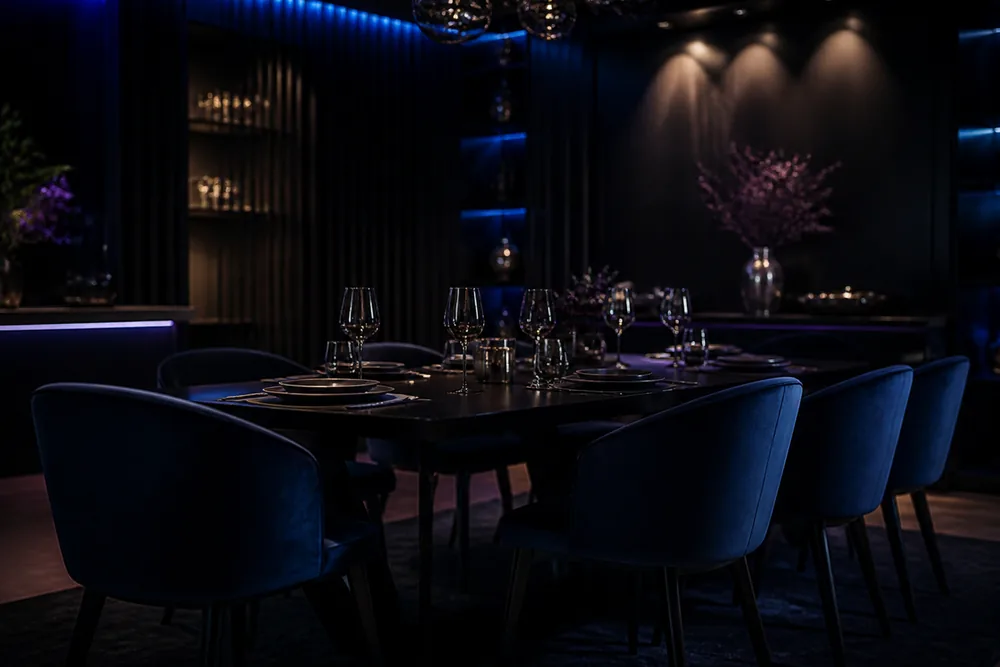
- Dining chairs — the workhorse line. Sizing the order correctly (turns, spares, fixed-seating offsets) is its own discipline; we wrote the method up in how many restaurant chairs you actually need.
- Tables and table bases — tops and bases are quoted separately more often than not.
- Booths and banquettes — usually semi-custom, longest furniture lead time on the list; get the dimensions right on the shop drawing because they're brutal to fix after.
- Bar stools — separate durability spec from dining chairs; footrests take the abuse.
- Host stand, wait stations, service cabinets
- Patio furniture if you have outdoor seats — a different spec universe (weather, stacking, wind weight)
- Lounge and waiting-area seating
- Decorative lighting, mirrors, art, planters — the "fixtures" middle child of FF&E
- Window treatments, floor mats, coat hooks, highchairs and boosters — highchairs get forgotten on roughly half the opening budgets we've reviewed
The back-of-house FF&E list
- Cooking line: ranges, ovens, fryers, griddles, salamanders, hoods (hoods often straddle the construction line — flag it with your contractor)
- Refrigeration: reach-ins, undercounters, prep rails, ice machine
- Prep: worktables, slicers, mixers, food processors, scales
- Warewashing: dish machine, sinks, drying racks
- Storage: shelving, dunnage racks, ingredient bins
- Smallwares: pots, pans, utensils, containers — hundreds of small lines that add up to a real number
- Office and tech: POS terminals and printers, safe, desk, security cameras, music system
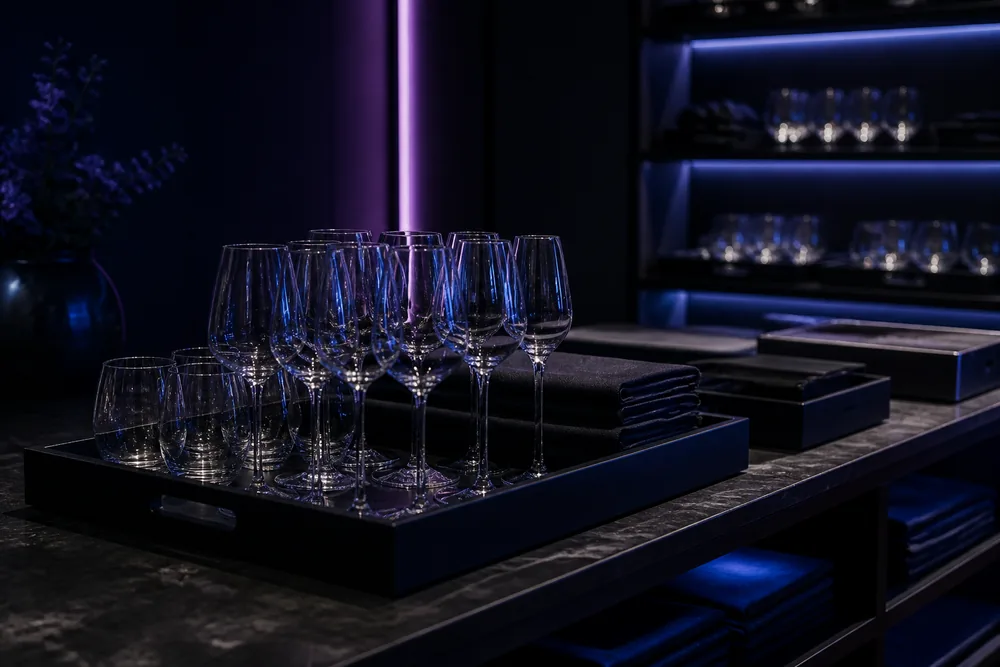
- Tabletop: china, glassware, flatware — order 1.5 to 2 times your seat count in place settings, because breakage starts before opening night does
How do you budget restaurant FF&E?
Every project is different enough that we distrust one-size percentages, so here's the method we actually use instead of a magic number:
- Count seats first. Almost every FF&E line scales from seats — chairs, tables, settings, even kitchen capacity. Run your floor plan through honest capacity math before pricing anything (our restaurant seating layout guide covers square footage per cover by service style).
- Price the furniture package per seat. Dining furniture — chairs, tables, booths — typically lands between $150 and $1,000-plus per seat depending on your tier, fast-casual to fine dining. We've broken those tiers down with real numbers in the restaurant furniture cost guide.
- Get the kitchen quoted as a package. Kitchen equipment is usually the largest single FF&E category, and dealers quote full lines; make them itemize so you can see where used equipment substitutes safely (prep tables, shelving: yes; refrigeration compressors: think harder).
- Add 10 percent contingency. Not because the list is wrong, but because the list grows. It always grows. The mop sink accessories alone.
- Budget freight and installation as their own lines. Furniture freight, equipment rigging, booth installation — on the projects we've furnished these are real percentages of the total, not rounding errors, and they're the lines first-time owners most consistently forget.
When should each category get ordered?
FF&E timing is where openings slip, because lead times vary wildly by category. Working backward from opening day, here's our standard sequencing:
- 12 to 16 weeks out (or more): anything custom or semi-custom — booths, banquettes, millwork-adjacent pieces, custom-finish tables. These are your longest leads, and their shop-drawing approval loops add weeks people forget to count.
- 8 to 12 weeks out: the main furniture package if any of it is factory-order rather than stocked; kitchen equipment packages, which need to coordinate with inspections and utility hookups anyway.
- 4 to 8 weeks out: stocked furniture, smallwares, tabletop, POS hardware.
- 2 to 4 weeks out: the long tail — mats, highchairs, office gear, decor gaps.
Two rules make the sequence work. First, confirm stock in writing at order time — "in stock" on a website is a mood, not a commitment. Second, build a two-week cushion between every promised delivery and the date you truly need it; training week in a chairless dining room is a rite of passage nobody needs. And coordinate deliveries with construction reality: furniture arriving before the floors are finished gets stored, moved twice, and damaged once.
What's NOT FF&E (so you don't double-budget it)
- Leasehold improvements: walls, flooring, plumbing, electrical, the hood ductwork, the walk-in box
- Operating inventory: food, beverage, paper goods — that's opening inventory, a different budget
- Pre-opening expenses: training payroll, deposits, licenses
- Working capital — and if the FF&E budget is eating the working capital, cut FF&E, not runway; a slightly cheaper chair with a functioning restaurant behind it beats the reverse
One more distinction worth keeping straight for the accountant: FF&E depreciates. Furniture and equipment are typically written down over a multi-year schedule while leasehold improvements follow their own longer one, and that difference shows up in your taxes and in any future sale of the business — a buyer values a restaurant's FF&E as a listable, transferable asset. Keep the FF&E purchases itemized from day one (every PO, every serial number on the big equipment). Future-you, sitting across from a buyer or an insurance adjuster with a clean asset list, will be very grateful to opening-you.
Where owners overspend and underspend
After a lot of openings, the pattern is consistent. Overspent: custom millwork moments, statement lighting, and kitchen capacity for a menu twice the size of the real one. Underspent: dining chairs (the single most-touched object in the building — buy commercial grade, full stop), smallwares counts, and spares of anything upholstered. Our honest rule: guests forgive a plain light fixture; they remember a wobbly chair. Spend where bodies touch.
And whoever supplies your furniture package, vet them like it matters, because mid-project supplier failures are the FF&E disaster with no good recovery. The questions worth asking — warranty terms, lead-time honesty, what "contract grade" claims actually mean — are all in our guide to vetting restaurant furniture suppliers.
The short version
FF&E is a long list, but it's a knowable list — seats drive quantities, tiers drive prices, and the categories above are the whole map. Build it line by line, keep freight and contingency honest, and the number stops being scary and starts being a plan.
Or let us build it with you. The furniture side of restaurant FF&E — chairs, tables, booths, stools — is exactly what we supply, and turning a floor plan into a priced, landed furniture package is the most satisfying part of our week. Send us your plan and your concept, and we'll send back the list with real numbers on it.