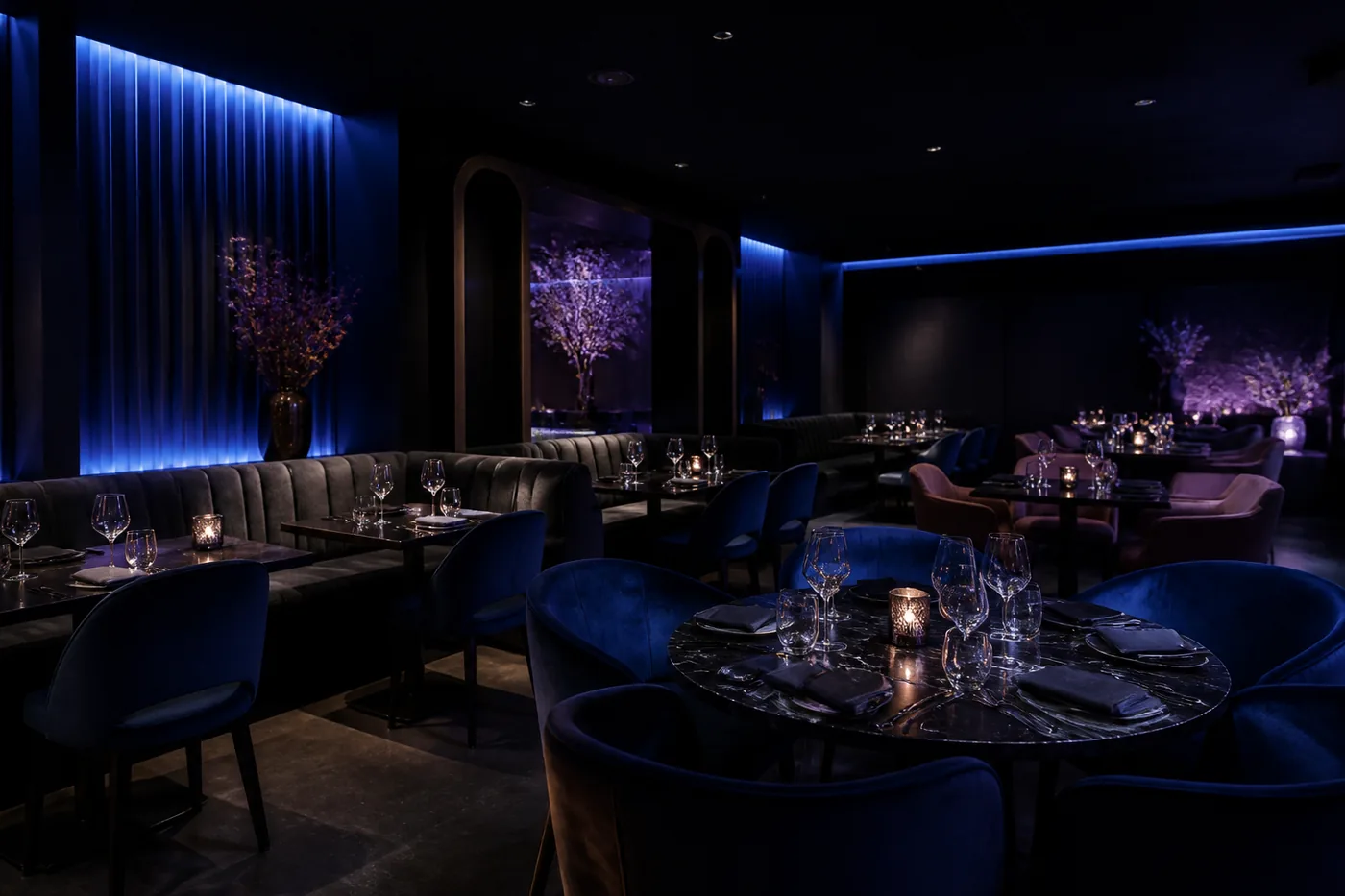
Budget your dining room furniture per seat: roughly $150 to $300 per seat for fast-casual, $300 to $600 for full-service, and $600 to $1,200-plus for upscale and fine dining. Those ranges cover chairs, tables, and your share of booths — the complete front-of-house furniture package, at the wholesale pricing a commercial buyer should be getting.
We've priced dining rooms at every one of those tiers, so we'll break the ranges into actual items, show you a worked example, and — more usefully — tell you which trade-offs inside those ranges are smart and which ones you'll re-buy in eighteen months.
What does each piece actually cost?
The wholesale ranges we actually quote:
- Metal dining chairs: $60–$120. The workhorse of casual concepts. Steel frames, wood or padded seats. Durable, stackable at the lower end, and honest value.
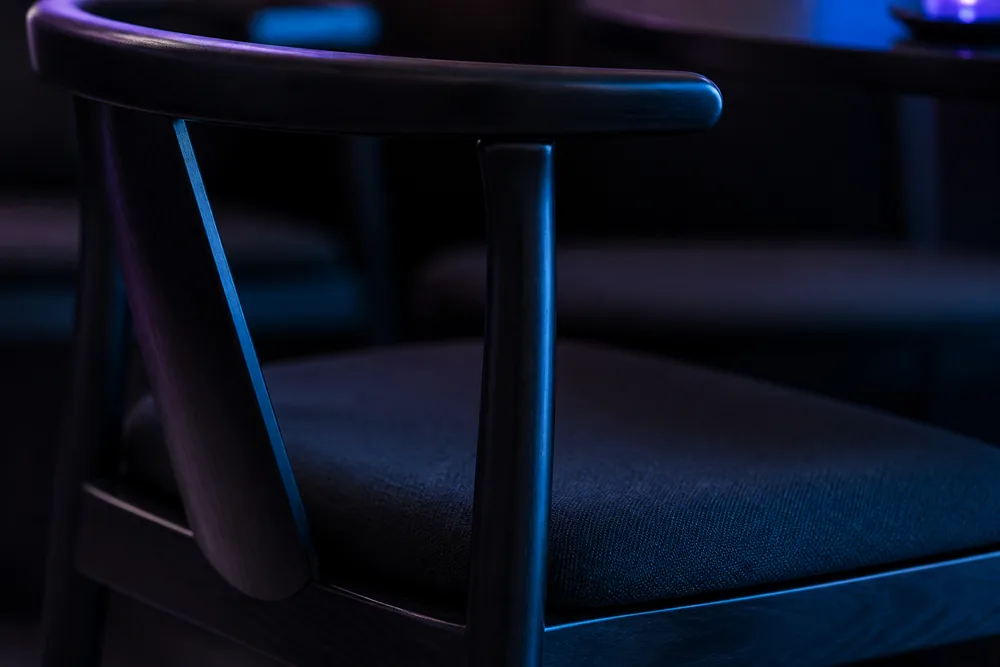
- Wood dining chairs: $90–$200. Warmer look, full-service standard. The spread is mostly joinery and finish quality — and joinery is exactly where cheap wood chairs die.
- Upholstered and premium chairs: $180–$400-plus. Upscale dining, lounge areas, anywhere the seat itself is part of the experience.
- Bar stools: add roughly 20 to 30 percent over the equivalent chair — more frame, more abuse, footrests that get kicked ten thousand times a year.
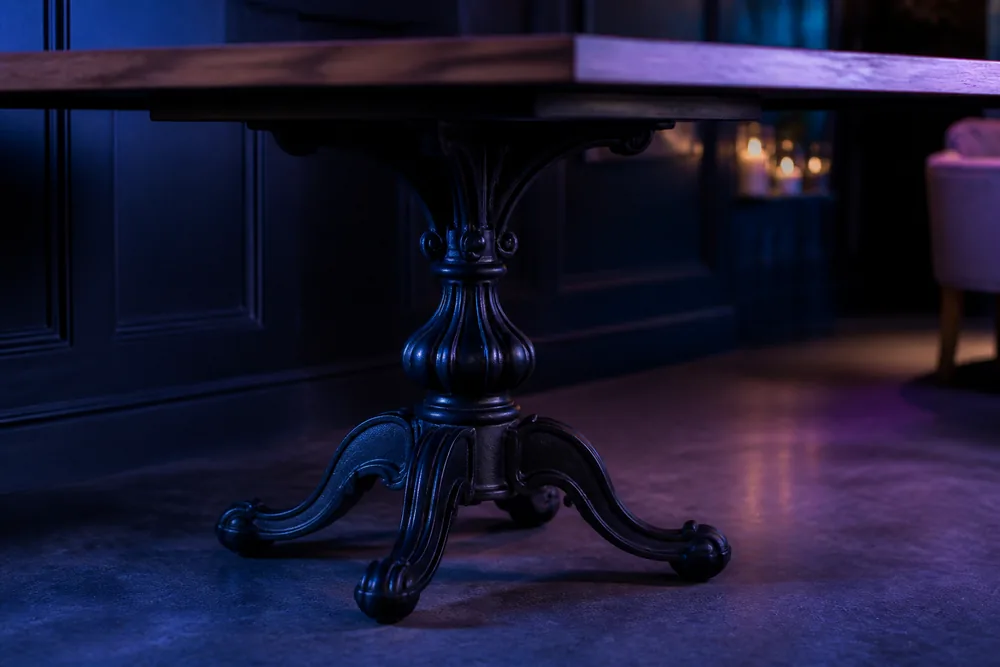
- Table tops: $80–$350 depending on material — laminate at the bottom, solid wood and stone-look tops at the top. Bases: $60–$150 each, quoted separately. A "cheap table" with a flimsy base is a wobble complaint generator; spend up on bases before tops.
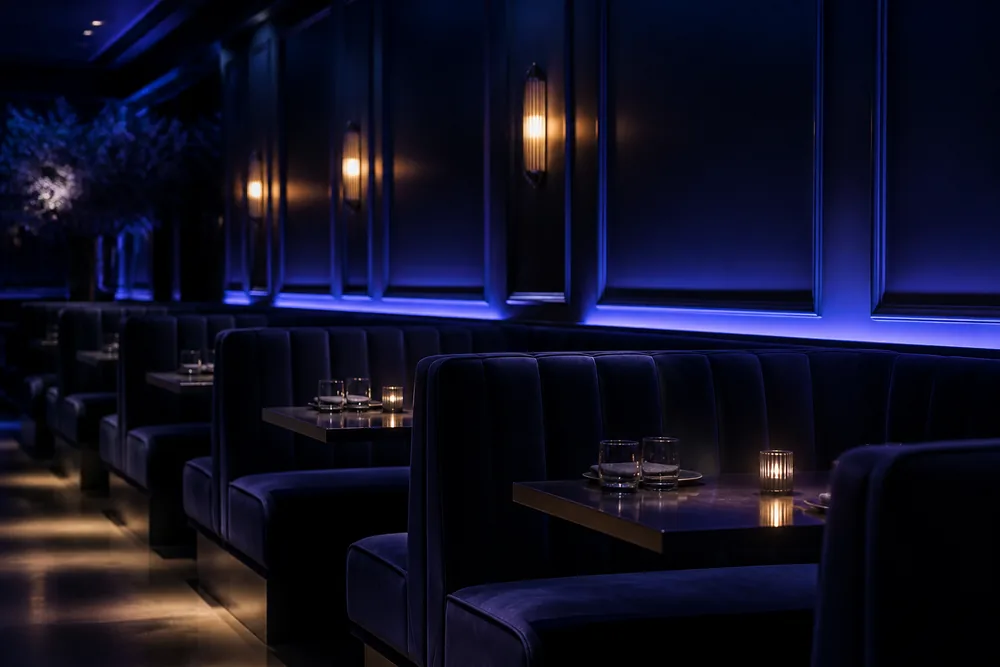
- Booths: roughly $250–$500 per linear foot for semi-custom upholstered units, installed cost varying with vinyl grade and back height. A standard 4-foot double booth setup (two benches) is a four-figure line item — which is why booth dimensions get confirmed on paper first (here's our dimensions guide).
A worked example: the 96-seat full-service dining room
Mid-tier concept, mix of seating like most real floor plans:
- 60 chairs at $110 — $6,600
- 9 double booths (36 seats' worth) — $11,000–$14,000
- 28 table tops and bases (mix of deuces and four-tops) at $220 average — $6,200
- 6 bar stools at $140 — $840
- Subtotal: roughly $25,000–$28,000 — about $270 to $300 per seat before freight
Add waiting-area seating, a host stand, and patio furniture if you have it, and a genuinely mid-tier 96-seat room lands in the $28,000–$38,000 neighborhood delivered. Fast-casual versions of the same room — more metal, fewer booths, laminate tops — come in near half that. Steakhouse versions double it without breathing hard.
Two order-sizing notes that protect the budget: count chairs from the floor plan, not the dream (booths displace chairs; circulation kills theoretical seats), and buy 5 to 10 percent spares because finish programs get discontinued. Both are covered properly in how many restaurant chairs you actually need.
Why is the range so wide? (The three multipliers)
- Construction grade. A $70 chair and a $150 chair can look identical in photos. The difference is inside: joinery, frame gauge, foam density, and whether it passed a commercial seating test like ANSI/BIFMA X5.4. The $70 chair is not a scam — it's a five-to-seven-year chair. The $150 chair is a ten-plus-year chair. Match the chair to the length of your lease and your concept's life expectancy, and both are smart buys.
- Customization. Stock finishes ship in weeks and cost catalog price. Custom stains, COM fabric (your own fabric sent to the factory), and made-to-spec booths add cost and — more painfully — lead time. Custom is worth it for the pieces that define the room; it's vanity on the ones nobody photographs.
- Freight. Furniture is bulky, and freight typically adds 8 to 15 percent to a dining room order. Always compare landed cost — delivered to your door — never catalog price. A chair that's $6 cheaper and ships from three time zones farther away usually isn't cheaper.
Where to spend and where to save
Our honest hierarchy, the one we give clients who trust us with their budget:
- Spend on chairs. Highest-touch object in the building, first thing guests physically judge, and the item whose failure is a safety issue rather than a style issue.
- Spend on booth vinyl. The upgrade from budget to contract-grade vinyl is small per booth and enormous in year three, when the budget vinyl is cracked at every seam.
- Save on table tops in casual concepts — a good laminate under table settings reads fine and shrugs off water rings that would scar wood.
- Save on quantity, not quality. If the budget pinches, trim eight seats from the plan rather than downgrading a hundred chairs one grade. Fewer good seats out-earn more bad ones, because bad seats exit service early and take revenue with them.
- Never buy residential to save money. Consumer furniture in commercial service fails at the joints within the first year or two, the failure is a guest on the floor, and you'll buy the commercial chair anyway — the second time at rush freight. This is the most expensive "saving" in the industry.
Does patio furniture follow the same math?
Mostly, with two adjustments. Outdoor commercial furniture runs similar per-piece prices to indoor at the aluminum-and-resin tier — roughly $70–$150 for a solid commercial patio chair, $150–$350 for tables — but the spec that matters changes: UV-stable finishes, drainage, stackability for off-season storage, and enough weight (or ganging) that the first windy afternoon doesn't rearrange your investment. The second adjustment is lifespan honesty: even good outdoor furniture lives a harder life, so budget replacement on a shorter cycle than the dining room. Patio seats often carry the best margin in the building; furnish them like you mean it, but with product built for weather rather than indoor chairs on a field trip.
How do you value-engineer a quote without wrecking it?
When the first quote lands over budget — it usually does — cut in this order: swap custom finishes to stock (same chair, weeks faster, meaningfully cheaper), trade table-top material down before touching chairs, shrink the specialty pieces (fewer lounge items, simpler host stand), and negotiate freight by consolidating suppliers rather than shaving quality. What we refuse to do: drop a construction grade on the chairs, thin out the booth vinyl, or delete the spares. Those three cuts always come back with interest.
How does furniture fit the bigger opening budget?
Dining furniture is one line of your FF&E — furniture, fixtures, and equipment — alongside the kitchen line, refrigeration, smallwares, and POS. If you're building the whole opening budget, start from the full list so nothing surprises you at the end: our restaurant FF&E guide walks every category, and our seating layout guide makes sure the seat count you're budgeting for is one your square footage can actually deliver.
And before any of these numbers become a purchase order, vet whoever's supplying them — the gap between a real contract-furniture supplier and a reseller with a nice website shows up mid-project, at the worst possible time. Our supplier vetting guide covers exactly what to ask.
Getting your real number
Ranges build budgets; quotes build restaurants. When we price a dining room, we spec each piece to the concept's actual duty cycle, quote everything landed, and flag the two or three places where the budget is buying the wrong thing. That last part is usually worth more than the discount.
If you want that pass on your project: restaurant furniture is the core of what we supply. Send us your floor plan and your concept — we'll send back a per-seat number you can take to your lender, with the trade-offs written out honestly.